Tuesday, September 19, 2006

Pope Benedict, Athens and Jerusalem

What should be the proper relationship between reason and Christian faith? In the third century, Tertullian asked the question, "What does Athens have to do with Jerusalem?" Pope Benedict XVI in a recent address at the University of Regensburg has answered a resounding, "everything."

This is the same speech in which the pontiff quoted a 14th Century Byzantine emperor speaking negatively about Mohammed. This is the same speech that criticizes violence done in the name of Islam, which at the same time, some Muslims use as a justification for violent acts. (I’ve stopped trying to understand that one.) Unfortunately, Benedict’s main thesis is lost in the violence that has erupted.

Benedict’s argument for the compatibility of reason and revelation is merely the reiteration of many years of Roman Catholic thought. For example, one could argue that Thomas Aquinas’ whole project hinged on making Aristotle compatible to Christian teaching. Benedict argues that the bringing together of the Athens and Jerusalem is Christianity, and Christianity is basically a European religion. Benedict says,

This inner rapprochement between biblical faith and Greek philosophical inquiry was an event of decisive importance not only from the standpoint of the history of religions, but also from that of world history -- it is an event which concerns us even today. Given this convergence, it is not surprising that Christianity, despite its origins and some significant developments in the East, finally took on its historically decisive character in Europe. We can also express this the other way around: This convergence, with the subsequent addition of the Roman heritage, created Europe and remains the foundation of what can rightly be called Europe.
This attitude explains Benedict’s concern about the recovery of Christianity in Western Europe. In his view, Europe is not Europe without the Christian faith. Moreover, it reveals one of Benedict’s fundamental critiques of Islam. To extend Tertullian’s metaphor, Islam has failed to bring Mecca and Athens together. However, the pope’s criticism here of Islam is only illustrative. He is more concerned about keeping Jerusalem and Athens firmly intertwined.

Benedict believes that the Reformation began the de-Hellinization of Christianity. In other words, Reformers divided Jerusalem and Athens. Kant reduced Jerusalem to a ghetto, and Harnack bulldozed much of Jerusalem to make it presentable to the modern Athens. It is not surprising that the head of the Roman Catholic Church would suggest that liberal Protestant theology was the inevitable result of Martin Luther nailing 95 theses on the Wittenberg door. It is also not surprising that I respectfully disagree.

This brings me back to Benedict’s quotes about Islam. He quotes the observations of Theodore Khoury, the editor of the 14th Century dialogue mentioned earlier.
But for Muslim teaching, God is absolutely transcendent. His will is not bound up with any of our categories, even that of rationality. Here Khoury quotes a work of the noted French Islamist R. Arnaldez, who points out that Ibn Hazn went so far as to state that God is not bound even by his own word, and that nothing would oblige him to reveal the truth to us. Were it God's will, we would even have to practice idolatry.
I must admit that when I read this description of Islam, I immediately thought of some Presbyterians that are so enamored with the sovereignty and freedom of God that they forget the incarnation. I am reminded of those Presbyterians who claim that the Holy Spirit would speak in contradiction to Jesus Christ or the Scriptures. Benedict sees this as a failure of reason. I see it as a failure to embrace revelation.

The Reformers were not trying to remove reason from faith. Instead they were trying to keep reason humble. Even our reason is subject to sinfulness and idolatry. By starting with the self-revelation of God in Jesus Christ and the Scriptures, reason is made modest. Its ultimate role is not the discovery of the truth but instead the protection of the truth. Rather than Benedict’s Hellinization, I believe that God’s revelation makes our faith different from the Islam described by Ibn Hazn. That revelation is the corrective moving us away from idolatry, sin, and heresy. Only when we follow Jesus’ words, "abide in me," will the right relationship between faith and reason be established.

Sunday, September 17, 2006

A Matter of Polity

A few days ago, I heard a member of a member of another Presbyterian church tell this joke:
Two dogs meet in a park. On says, "I am a St. Bernard. I help save people." The other responds, "I don’t know what I am. I must be a Presbyterian."
I believe that many of our problems in our denomination are rooted in an identity crisis. We have real doubts about what it means to be Reformed, Presbyterian and in some cases, Christian. Lately, I have been concerned about the lack of understanding of basic Presbyterian polity among our leadership. Our congregation has recently received a pastoral letter from the Synod exec of the Synod of the Sun. In the letter, Judy Fletcher wrote...

With leaders from all 11 presbyteries in this synod, we worshipped, prayed and considered the needs of Presbyterians. In congregation after congregation there are people like you trying to be faithful to Christ and diligent in mission and ministry. That was just as true before the Assembly...

All 11 presbyteries affirmed that the Book of Order has not changed and the ordination of non-celibate gay and lesbian persons is still prohibited. Presbyteries expressed commitment to uphold our constitution.
Now, I was grateful to hear that those in attendance--presbytery executives, staff members, members of Committees of Ministry, moderators of presbyteries, etc–agreed to uphold our constitution. However, those people do not speak for the presbytery as a whole. The language of "affirmed" suggests that a formal action was taken. None was. I will not question anyone’s motives here, but the synod executive’s opinion doesn’t carry much weight. For example, Mission Presbytery’s recent actions along with the synod’s Permanent Judicial Council’s ruling appears to contradict the Synod executive’s letter. Someone sitting in a pew would be baffled again at more confusing language coming from the leadership of the church.

Too often we seem to conflate the leadership of a governing body for the body itself. I have seen pastors treat sessions as extensions of themselves. I have seen presbytery executives assume that their opinions have the weight of the presbytery behind them. Many buy into the ruse. More than once during debate at a presbytery meeting concerning an overture from a particular session, some asked the pastor about "his or her overture." Such actions are contrary to Presbyterian governance.

Another example of poor polity comes from the "double super secret" documents drafted by denominational lawyers addressing property concerns. From what I understand, those documents were distributed to some presbytery executives as early as 2002. The documents were labeled as "confidential" or "do not distribute." Why should the presbytery itself be kept in the dark? Isn’t the presbytery the governing body, not the executive? In fact, I would argue that the executive works only at the discretion of the presbytery. Historically, presbyteries did not even have executives. Bypassing the normal governing bodies suggests that someone was trying to hide something (even if they weren't).

Our polity indicates we are ruled by elders. Unfortunately, our practice doesn’t always agree.

Monday, September 11, 2006

Our Community

I just e-mailed this letter to the editor of our local newspaper...

Dear Editor,

On the fifth anniversary of the worst attack on American soil, a group of people gathered in front of the downtown fire station our small town. We are far away from New York City, Washington, DC, and Shanksville, Pennsylvania, yet this little town south of the Red River understands community in a way that extends beyond geography.

Since my family moved here in 2003, I have again and again been impressed with the sense of community here. I have experienced it among the pastors and church members here. I have seen it in the precious time that many in our town give to volunteer work. I have witnessed it as the community rallies around folks in need. What other community of our size can boast of so many active clubs, organizations, and groups? As people decry the isolation and individualism of the modern world and small towns disband service organizations due to lack of interest, this town surprises me.

True, we face some huge challenges. The social problems of the world are here–substance abuse, teenage pregnancy, broken families, and the like. We wring our hands over them like everyone else. There are many even within our midst who are lonely and disconnected. Still, I have hope because of the grace God has already given us. Our sense of community suggests a way forward.

9/11 reminded us of words like sacrifice, compassion, faith, and community, yet they are more than words. They are a calling to a way of life. Perhaps I am naive, but I think our city just might be receptive to that call.

September 11th


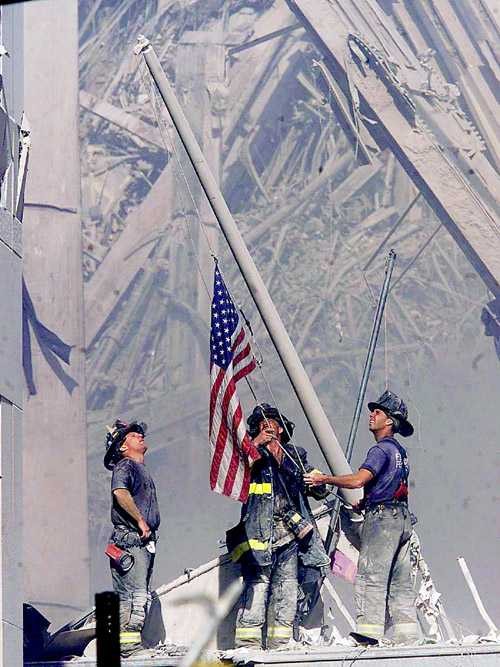
Five years ago, we were reminded that evil is real, that heroes exist, and that hope never dies. Despite her sins, America remains a beautiful, wonderful land whose greatest resource is her people. Let us not forget those who died, those who mourn, and the children whose parents are never coming home.

"Oh, that my words were recorded, that they were written on a scroll, that they were inscribed with an iron tool on lead, or engraved in rock forever! I know that my Redeemer lives, and that in the end he will stand upon the earth" (Job 19:23-25).

Tuesday, September 05, 2006

Purpose-Driven Splits?

A friend sent a Wall Street Journal article* reporting that Rick Warren’s Purpose-Driven® methods are dividing some congregations. (Alas, there is no link unless you have a paid subscription.) As churches adopt Warren’s approach, some traditional members are balking. WSJ readers probably won’t be too sympathetic with the comments of one of the dissatisfied, "[The pastor of one church in transition] didn’t preach on someone going to hell." That’s probably the first time that I’ve heard that a pastor didn’t preach enough hellfire and damnation.

Nonetheless, I am sympathetic with the traditional churchgoers. There are serious concerns that Rick Warren has accommodated the gospel to a consumer-driven American culture. One pastor is quoted as saying, "I believe that Jesus died for everyone," not just people in a "target audience." These theological concerns are important and should not be ignored.

In addition, there are real pastoral issues when a congregation makes a major change. In the Purpose-Driven® Church, Rick Warren even suggests that pastors may want to think twice before applying his thoughts to an existing church. There is an implied preference for new church developments. Established congregations are just too messy.

Unfortunately, congregants who don’t feel respected and heard will work against any change. Forcing a cookie-cutter program on a congregation in a heavy-handed way does not win friends. I will easily grant that not every Purpose-Driven® congregation is guilty of this. However, some are reaping what they sow.
Some pastors learn how to make their churches purpose-driven through training workshops. Speakers at Church Transitions Inc., a Waxhaw, N.C., nonprofit that works closely with Mr. Warren's church, stress that the transition will be rough. At a seminar outside of Austin, Texas, in April, the Revs. Roddy Clyde and Glen Sartain advised 80 audience members to trust very few people with their plans. "All the forces of hell are going to come at you when you wake up that church," said Mr. Sartain, who has taught the material at Mr. Warren's Saddleback Church.

During a session titled "Dealing with Opposition," Mr. Clyde recommended that the pastor speak to critical members, then help them leave if they don't stop objecting. Then when those congregants join a new church, Mr. Clyde instructed, pastors should call their new minister and suggest that the congregants be barred from any leadership role.

"There are moments when you've got to play hardball," said the Rev. Dan Southerland, Church Transitions' president, in an interview. "You cannot transition a church...and placate every whiny Christian along the way."

Rick Warren distances himself from the hardball tactics, but no wonder some churches are finding splits instead of growth.

To be fair, I know nothing about church growth. No one is beating down my door searching for advice. As a pastor, all I try to do is love my people and more importantly love God. All I want is a church which manifests the fruit of the Spirit – "love, joy, peace, patience, kindness, goodness, faithfulness, gentleness and self-control" (Gal 5:22-23). I could care less whether it looks like Saddleback Church or not.

* "A Popular Strategy for Church Growth Splits Congregants" by Suzanne Sataline. Wall Street Journal. September 5, 2006.

Monday, September 04, 2006

Underlying Causes of Terrorism


Deep down, I long to be a pacifist. Although I accept the just war position as credible, I would love the simplicity of rejecting all violence. I would gladly march in step behind Stanley Hauerwas and John Howard Yoder with the banner of Christ unfurled. I search for nonviolent solutions, and I give serious consideration to the proponents of such. I am moved by the stories of Martin Luther King, Jr and the civil rights movement. I am emboldened by stories of Rosenstrasse where nonviolent protests by German family members won the release of Jews during the Nazi Regime. As a result, I was interested in reading David Cortright’s "Nonviolence and the Strategy against Terrorism."

Cortright begins by quoting Jim Wallis writing, "If nonviolence is to have any credibility, it must answer the questions violence purports to answer, but in a better way." The challenge is a world of Al Quaeda, Hezbollah, and a nuclear Iran. Can nonviolence provide a pathway to justice and peace? Unfortunately, I’m still searching. Cortright’s position does not satisfy.

Cortright’s response to terrorism hinges on two strategies. First, we should step up efforts of law enforcement and intelligence gathering. He writes,

The most urgent priority for countering terrorism, experts agree, is multilateral law enforcement to apprehend perpetrators and prevent future attacks. Cooperative law enforcement and intelligence sharing among governments have proven effective in reducing the operational capacity of terrorist networks. Governments are also cooperating to block financing for terrorist networks and deny safe haven, travel, and arms for terrorist militants. These efforts are fully compatible with the principles of nonviolence.
Whether these efforts are fully compatible with the principles of nonviolence is another debate. My guess is that Cortright would not allow law enforcement and intelligence agencies to use torture, for example, to gather information on terrorist groups. Beyond that, the problem of state-sponsored terror remains. We cannot send a squad car to a Taliban-controlled Afghanistan to pick up suspected terrorists. Likewise Iran will probably not honor our extradition requests. Force and the threat of force remain the staples of foreign policy. I’m still waiting for a credible alternative.

Second, Cortright suggests that we should address the underlying problems that leads to terrorism.

A nonviolent approach should not be confused with appeasement or a defeatist justification of terrorist crimes. The point is not to excuse criminal acts but to learn why they occur and use this knowledge to prevent future attacks. A nonviolent strategy seeks to reduce the appeal of militants’ extremist methods by addressing legitimate grievances and providing channels of political engagement for those who sympathize with the declared political aims.
A good question might be what constitutes legitimate political grievances? Poverty, injustice, the existence of Israel, the election of George W. Bush? Probably a better question might be why some peoples who face legitimate political grievances do not resort to terrorism? For example, blacks in Birmingham, Alabama at the height of segregation did not strap bombs to themselves and blow up buses. They had legitimate grievances, and they addressed them in another way.

Al Quaeda has released another video calling on Americans to convert to Islam or face the consequences. Iranian President Ahmadinejad has challenged President Bush to embrace Islam. Palestinian Muslims forced the conversion of Fox News reporters at gunpoint. Sadly, when I look at the underlying causes of the terrorism, one screams at me–totalitarian Islam.

Cortright seems downright oblivious to this underlying cause. Unfortnately, no solutions will be found unless we accurately understand the threat.

Thursday, August 31, 2006

The Nature of Doctrine

Again, I've been listening to a podcast from Pittsburgh Theological Seminary about the recent General Assembly report on the doctrine of the Trinity. In the lecture, Charles Partee spends some time discussing the practice of theology and the nature of doctrine. Here are some excerpts (the emphasis is my own)...
I would have liked to have seen a much more dramatic approach to the question of what it is to do theology. That is, how does one create doctrine, and for what purpose.

This is my suggestion. Theology in my mind is not science. It simply is not science, and the disciplines of science have only a tangential reference to what theologians do. Secondly, theology is not philosophy. We do a lot of talk about reason and synthetic a priori and analytic a priori and concept of experience and all those kinds things. But in the last analysis, theology is not philosophy no matter what tools that one might appropriate from that discipline. At the same time, theology is not poetry. There is a real reference. There are factual components, and what we do in theology is to make truth claims of a particular sort.

My conviction then is that what theology is trying to do is not explain but protect. It maybe entirely too avant garde for a committee of the General Assembly to try to make that point. But I would suggest that in a classroom setting that you at least reflect on the notion that theology is not the truth but is in fact an attempt of the reverent Church to protect the truth which is quite beyond our comprehension…

In the Christian Church for all our academic emphasis, the first orders of speaking are, in fact, preaching, hearing, singing, and praying. Theology is in my judgment a second order of activity. It is an attempt in our thinking to be faithful to these other parts of the church’s life. The whole language of the Christian Church is not classroom language but is church language. Therefore, a lecture and a sermon are very different activities.

Candidates for ministry vow to "receive and adopt the essential tennets of the Reformed faith." As we examine candidates and discuss essential tennets within the church, some reflection on the nature of doctrine is necessary. Theology is secondary to worship. Our theology must not begin with humanity or an abstract notion of God. It begins on our knees in worship. Ultimately, doctrine is in service to the Church. If it does not protect the Biblical witness, then it is useless. I agree with Partee here.

Wednesday, August 30, 2006

Renewing One Congregation at a Time

Jim Berkley is a reporter for the Institute on Religion and Democracy which has spent the past several years seeking a change in the social and political witness of mainline denominations. As a Presbyterian, Berkley primarily concerns himself with issues facing the PCUSA. He attended the recent Presbyterian Coalition and the Presbyterian Global Fellowship meetings in Atlanta.

Berkley suggests that the Presbyterian Global Fellowship is following a specific playbook.
The Presbyterian Global Fellowship (PGF) attitude seemed to be that the Presbyterian Church (U.S.A.) is largely irrelevant. Thus, the PGF folks will just go ahead and build strong churches that have an outward, missional focus. They're not going to spend much energy anymore thinking about polity machinations or Louisville decrees; they're just going to pursue excellence with a band of missional companions, despite the denomination.

Whether this attitude is an accurate appraisal of PGF remains to be seen. Berkley himself admits as much. No matter how accurate, however, the thought represents the view of many evangelical pastors and elders within the denomination. Whether weary of the battle or happier in hands-on ministry, evangelicals often concern themselves with their local congregation, ignoring the happenings in the greater church.

If Berkley is correct, I do not see this attitude as much of a change from the status quo. Vibrant, healthy churches have always existed in the PCUSA. Unfortunately, as individual congregations have improved, that improvement has not translated to the greater denomination.

Can this strategy bring about renewal in the denomination? Only if congregations become less insular. Healthier congregations should partner with weaker ones. Coalitions of congregations should develop and promote resources for renewal. If possible, these should be accomplished through presbyteries. If not, congregations should do these things on their own. Many small, struggling churches are begging for assistance. Evangelicals should make a concerted effort to help these congregations. Through local churches, the denomination can be renewed one congregation at a time.

Monday, August 28, 2006

One Cheer for Christendom

During a mission trip to Senegal, I had an opportunity to teach church history to some future West African pastors. At one point in the class, we were discussing about how Christianity became the official religion of the Roman Empire. Raised on Jacques Ellul and Stanley Hauerwas, I began to decry the heresies of Christendom. I argued that the political recognition of Christianity was a negative mark on the history of the church. The students were confused. Many of these students had come from countries where Islam was the dominant religion with either cultural or political sanction. They could not imagine that a Christianity without persecution could be a bad thing.

I thought of those students recently when I heard a lecturer condemning the evils of Christendom. What was once an important and novel critique has unfortunately become cliché. Church history before Constantine, good. Church history after Constantine, bad. To be fair, the sins of Christendom still haunt us. The largest is the church’s abdication of it’s witness to the kingdom of God. Instead, the church has often been a chaplain for the existing cultural and political order.

I taught my African students that the official recognition and protection of Christianity opened the door to heresy and laziness. They taught me that being a persecuted minority isn’t much fun. Although flawed, Christendom deserves one cheer if not three.

We must not forget that Christendom Christianity witnessed to the gospel in its own imperfect way. Christendom produced Martin Luther, John Calvin, Karl Barth and even Stanley Hauerwas. Along with its sins, the Christendom church has done a multitude of good works. The church is always a mix of wheat and tares. To emphasize the tares to the exclusion of the wheat is patently unfair.

The real danger of making a caricature of Christendom lies not in the past, but the future. Christendom is by most accounts dead. The post-modern church will not be susceptible to the sins of past. However, she will be tempted in many new ways. Being anxious to condemn Christendom, we make ourselves blind to our own temptations. Again, the church is always a mix of wheat and tares. Every age demands sober reflection on the nature of the church.

Sunday, August 27, 2006

Hate-Word of the Month: Missional

I have recently subscribed to the Pittsburgh Theological Seminary podcast, and I was listening to a classroom discussion dated 5-3-06 concerning the General Assembly report on the Trinity. The discussion is a good addendum to an article written by Andrew Purves and Charles Partee in the March/April 2006 issue of Theology Matters.

Given some of the recent discussion concerning the Presbyterian Global Fellowship, I found this intriguing quote by Andrew Purves...
I've decided over the last couple of weeks that my hate-word of the the month is "missional." I've gotten tired of "missional." And I've gotten tired of "missional" because I see it more and more functioning as an abstract adjective. Then it gets filled in with content from wherever. I keep wanting to use the word, "christological." Because if we are in union with Christ, of course, we will be a mission people. We can't be otherwise.

I am a pastor whose favorite books in seminary were Calvin's Institutes and Bosch's Transforming Mission. I believe Guder's Missional Church is essential reading for pastors. I am currently leading my congregation with the help of the Center for Parish Development to become more "missional." Despite all this, I am totally in agreement with Purves.

Jesus Christ is more foundational than the mission to which he calls. Mission has definitely been a neglected part of ecclesiology. However, we must not over-compensate by neglecting christology.

Monday, August 21, 2006

PGF and a Warning from Fox News

"Can Rick Warren save the world?"

That question was the subtitle from a Fox News special last night about Rick Warren and his plans for ending "poverty, disease, illiteracy, spiritual emptiness, and egocentric leadership."

Can Rick Warren make an impact in the world? Yes. Can Rick Warren make a positive influence? Yes. Can Rick Warren save the world? No. There is only one Messiah, and Rick Warren ain't him. I don't blame Rick Warren for the Fox News title. I'm sure he was embarrassed. In fact, I wouldn't be surprised if Warren had a hand in Fox News changing it on their website (Check out before and after).

After attending the Presbyterian Global Fellowship, the offensive Fox News title was a good reminder of the dangers before us. Being missionally-minded must not become a righteouness based on our works. It is easy to be overwhelmed at the pain of the world. Likewise, it is easy to become prideful at our efforts to alleviate suffering. The focus then becomes us. Some might become self-righteous on their own good deeds, but the majority will become burned-out or guilt-ridden because they can't do enough.

Should we reject works? Do we ignore the call to be missional? Heaven forbid. Faith without works is dead, but we must be ever vigiliant to avoid idolatry. The Presbyterian Global Fellowship and our missional congregations must preach and teach the amazing grace of our Lord, Jesus Christ. We should see obedience to Christ and our good works as gratitude to God. The only way we can be "outwardly focused" is to be "inwardly strong."

I am not suggesting that the leadership of PGF intends anything amiss. I just know that they have hard work ahead of them. I pray for their wisdom and courage.

We cannot save the world. Thankfully, Jesus Christ can and has.

Sunday, August 20, 2006

Presbyterian Global Fellowship

I’ve been to Atlanta and back. For the past few days, I’ve been attending the Presbyterian Global Fellowship meeting. This group was born out of evangelical frustration with the fights on sexuality and the financial decimation of the Worldwide Ministries Division of the PCUSA. They are committed to missions abroad and to being missional at home. They are also committed to remaining in the denomination. Several friends recommended that I attend, and I see now that I needed to be there.

I didn’t realize that the stress of pastoral ministry and the frustration caused by the General Assembly have wore me down. Gathering with other evangelicals in Atlanta was therapeutic for me. I wept as I listened to stories of God’s faithfulness. As one speaker suggested, we need to remind each other of who Christ is and what his purpose is for our lives. In the midst of life, we forget too easily.

Clearly, I had a good experience, but I do have concerns. The Presbyterian Global Fellowship is still young, without form or function. We do not know what its relationship with the Presbyterian Church USA will be. We do not know how it will relate to the other renewal groups such as Presbyterians For Renewal, Presbyterian Frontier Fellowship, and the like. We do not know how the fellowship intends to foster the revitalization of congregations. These are not complaints. Rather, it is an acknowledgment that the leadership of the organization has some difficult waters to navigate. General Assembly Moderator Joan Gray was right that they should lead from their knees.

As the organization moves forward, more time will be needed to develop theological clarity. Missional has become a buzz word in churches. In Atlanta, I heard a variety of interpretations of its meaning. Some assumed that missional merely meant more outreach programs. Others saw missional simply in terms of cross-cultural mission trips. Some spoke of organizing the church around mission implying that our unity was found there. I believe these are simplistic understandings of the term. The church is organized around Jesus Christ who sends us into the world. Thankfully some were expressing a more biblical and profound understanding of mission. I hope that these voices will dominate in the future of Presbyterian Global Fellowship.

People were pumped after the meeting this week. A speaker declared that the Atlanta event was the most important event in the PCUSA in twenty years. The truth of that statement remains to be seen. I don’t want to sound like a wet blanket, but the future of our corner of the kingdom of God deserves sober reflection.

Tuesday, August 08, 2006

Evangelical Politicking

The face of evangelical politics is changing according to Michael Gerson, the chief speechwriter of President George W. Bush during the 2000 campaign and first term. In an interview with Christianity Today, Gerson suggests that younger evangelicals are rejecting the one or two issues of the Religious Right and embracing a broader agenda of “social justice.”
Will compassionate conservatism survive rising deficits, the cost of Katrina, and illegal immigration?
There are some members of the Republican Party who do not understand the power and appeal of this set of issues and who have a much more narrow view of government's role…

Until recently, the Republican Party and Christian conservatives have complained that government is the problem. Is that a view they will likely return to?
I think it's a temptation, but I don't think it's going to happen. One reason is because of what's changed in evangelical political involvement.

I think there are lots and lots of young people, in their 20s to 40s, who are very impatient with older models of social engagement like those used by the Religious Right. They understand the importance of the life issues and the family issues, but they know the concern for justice has to be broader and global. At least a good portion of the evangelical movement is looking for leaders who have a broader conception of social justice…

You're starting to sound like Jim Wallis!
No, because I also don't think the answers can be found in the Religious Left. I don't think we can minimize some of the traditional issues. I don't believe it's possible to be concerned about social justice without being concerned about the weakest members of the human family. I also think that America can play an active and positive role in the world and that we're not at fault for everything.

A few comments of my own...

1. As these comments suggest, Compassionate Conservatism is more than a cynical rhetorical device. Gerson believes that it is a real governing principle. Despite six years into an administration which wears the term as a mantle, the movement remains ill-defined. Gerson seems to equate Compassionate Conservatism with a secular version of Christian "social justice." George W. Bush was apparently more telling than many thought when he named Jesus as his favorite political philosopher.

2. Jim Wallis is the founder and editor of Sojourners. He has been the default spokesperson for the Religious Left in the United States. Gerson interestingly doesn't seem to have a problem with Wallis' view of "social justice." Both seem concerned with poor and the downtrodden. Calls for battling the AIDS crisis in Africa or for providing perscription drugs for the poor resonate with Christians of all political stripes. The only difference Gerson suggests is that the Religious Left has walked away from traditional morality.

3. Gerson seems to reject the notion of limited government. He suggests that evangelical resistance to active government in the past was based upon the character of that government and not about the limits of government itself. He may be correct. Since evangelicals have had more power to influence policy, they have been less inclined to limit the government's role.

Although I am sympathetic to Gerson's goals for "justice" in society, I am very suspicious of an energetic and ever-expanding government. The attitude reminds me of the naivete of the social gospel movement a century ago. Government is a blunt instrument, and "hubris" is a real problem. The evangelicals of today need to be reminded of the pervasive problem of sin. Human depravity even pollutes our good intentions. Reinhold Niebuhr has much to teach this generation of evangelicals.

For those wishing to pursue their faith within the society, more thought should be given to the natural limits of government and power. We should realize that local governments, better than centralized ones, promote responsibility and accountability. We should also remember that structures such as the family, the church, and voluntary associations can often promote justice and human dignity even better than government. Most of all, we must know that true justice will remain ellusive on this side of the God's kingdom. We ignore these principles to our peril.

Wednesday, August 02, 2006

Preaching as Calling

The other day, I was doing some work on the "marks of the Church." What I discovered was an article on renewing congregational life by a mainline pastor printed in the Christian Century in 2000. In the article, there was a quote that intrigued me. The author, Anthony Robinson, writes...
After the dedication of a new community youth center, a leader in my denomination was invited by the mayor of the city to have coffee. The mayor, who happened to be African-American, told the minister, "You know, I appreciate all your efforts in getting this center opened, and I also appreciate your remarks today. But you are a Christian minister and I didn’t hear you say anything that couldn’t have been said by someone else. We need to hear something different from you. We need to hear something from the gospel."

This is a wake-up call to all preachers, including myself. When I first had the thought that God might be calling me into ordained ministry, I had a quandry. Why did I have to be ordained to preach? I mean, we are all called "to make disciples," to be "Christ's ambassadors," or to be Christ's "witnesses." What makes the preacher different? While in seminary, I was not ordained, but I preached every Sunday. What would be different in my preaching after my ordination?

Finally, I accepted a solution albeit an imperfect one. The preacher who is called and ordained must share God's Word. He or she must be Christ's witness. There are times when the gospel may be inconvenient, embarrassing, or even risky. The ordained preacher must speak the Word of God when no one else will.

It is so easy to lose track of this vocation. In the midst of ministry, preachers will acquire multiple interests and talents. Some become junior psychologists. Others are experts in marketing or management. Still others become political activists. These abilities are not bad things. In its own way, each can bring glory to God. A good preacher uses these talents to inform preaching, bringing them in submission to the Word. Occasionally, we forget our calling, and these talents replace our preaching. We've all heard sermons that were merely political diatribes, self-help advice or sociological analysis. Resisting these tempations, we must cry out with John the Baptist, "[Jesus Christ] must increase, but I must decrease" (John 3:30).

Teach for America: An Alumnus

The June 2006 edition of Readers Digest has a good article on Wendy Kopp the creator of Teach For America, the national teacher corps. It's like the Peace Corps except instead of going overseas, participants teach in inner-city and rural schools. I'm also an alumnus.

The organization has grown considerably since I was in the Mississippi Delta corps from 1992-1994. TFA is certainly more organized and efficient, but I wonder if it retains the entrepeneural spirit that existed. Back then, ideas about teaching and leadership were coming fast and furious. The organization was very experimental. We would discover (or more likely rediscover) good ideas and reject plenty of bad ones. At least we learned from our mistakes. Most emerged from teaching a bit less naive, more experienced, and committed to Teach for America's mantra--"Every child deserves a quality education."

Monday, July 31, 2006

Laughter Cannot Heal

I recently read an interview with Robin Williams from the April 2006, Readers Digest. The interviewer asked about doing comedy after 9/11. Finally, the interviewer asks…

Readers Digest: But in this case the laughter really did have a healing power?
Robin Williams: Healing isn’t the word. Therapeutic maybe, or cathartic. After being in extreme situations, it kind of brings you back to life.
The interview allows this exchange to stand without comment. A few years ago, I read Anatomy of an Illness by Norman Cousins. In this book, Cousins described the anesthetic effect of laughter. Since that time, I have heard so many people describe the healing properties of laughter that it has become cliché. As a result, Williams words took me by surprise.

As I have reflected on Robin Williams’ words, I think he’s right. Laughter can be therapeutic, cathartic or even medicinal. However, laughter cannot heal. I think of John Belushi or Chris Farley, and the pain which the laughter masked. If laughter actually healed, then both of these comedic greats would still be around. Like other medicines, laughter can be used and abused. Used correctly, laughter can help facilitate true healing. Used incorrectly, it’s like every other drug used to escape the brokenness.

Sunday, July 30, 2006

Newsletter: Influential Churches

Dr. John Vaughan, a researcher and consultant to churches, has recently compiled a list of the fifty most influential Protestant churches in America. I’m sorry to tell you that First Presbyterian Church of Vernon did not make the first fifty. In fact, none of the churches in Vernon did. The list is a "who’s who" of mega-churches in growing metropolitan areas. To even be considered for the list, a church had to have more than 2,000 in weekly attendance. Dr. Vaughan compiled this list based on the polling of the pastors from these same mega-churches.

I don’t want to be considered as unappreciative of the hard work that went into the list, but it seems that the results were bound to be skewed. Perhaps if our congregation had made the list, I would feel differently, but it seems that Dr. Vaughan had a particular understanding of "influential." Don’t get me wrong. There are faithful congregations up and down that list. Mega-churches have made and will continue to make a huge impact on the landscape of American Christianity. Still, I wish Dr.Vaughan had asked me what I thought were the most "influential" churches in America.

Now, granted I’m biased. So I would list our congregation at the top of the list. Then I would list Presbyterian churches in Irving, Texas, in Lexington, Indiana, and in Waynesburg, Malvern, Carrollton, Loudonville, and Berea, Ohio. I would also list a Methodist church in Diboll, Texas, a Southern Baptist church near Elaine, Arkansas, a Nazarene church outside of Houston, another Nazarene Church in Times Square, a Methodist church in Cordele, Georgia, and a couple of Roman Catholic churches in New Jersey and Ohio. This is not a complete list, but you can see that my list is varied. These congregations are large and small. They have nothing in common except one thing. They have all made a personal impact on me or the people I love.

When the disciples argued about who was the greatest, Jesus said, "If anyone wants to be first, he must be the very last, and the servant of all" (Mark 9:35). We are the most influential when we serve one another. Staying up all night with a friend in need, providing a meal, or teaching a Sunday school class that no one else will are tangible ways we influence the world for the gospel. The measurement of influence is not attendance, size or budget. Rather, real influence is faithfulness. Jesus said that the kingdom of God is like a mustard seed (Matthew 13:31). Starting small and inconsequential, its impact is greater than you can possibly imagine.

Pray for Rain

In my research for sermon on 1 Kings 18:17-39, I discovered an article from Jewish Heritage Online Magazine. The beginning of the article makes much about Israel being a land that is fed by rainwater rather than river water.
Rainfall is a symbol of divine providence. Furthermore, according to the biblical stories, in the great riverine countries a nation's sense of ownership of its land and mastery of its destiny is reinforced, leading to the development of tyrannical regimes and slavery. In land that drink rainwater, on the other hand, man constantly senses his dependence on God and for that reason such a land will sustain a regime of justice, free of subjugation.
Whether ancient Israel was a regime of justice is probably an open question. The Old Testament prophets certainly had their doubts. In the aforementioned passage, Elijah calls the people of Israel to faithfulness and repentance after worshipping the idols of Ba'al. After God embarrasses the prophets of Ba'al on Mount Carmel and the people return to faith, the long drought ends.

Still, there may be some truth to the claim. By this description of places that drink rainwater, the Texas plains must be a land that "will sustain a regime of justice, free of subjugation." Perhaps, we are. Being dependent on God, we certainly are suspicious of those who wish to usurp our freedom. Recognizing the sovereignty of God we, Texans, certainly have a transcendent understanding of justice.

Still, we are tired of our current drought. There may even be some who are willing to give up a bit of that freedom if it would bring some rain. This is one of the driest seasons on record for Wilbarger County, Texas. In the midst of a difficult drought, we've learned our lessons well. Many of us are crying, "Okay God, we've got it. We are ready to move on now."

So we pray for rain. Some may have read about officials in the city of Lubbock calling for a day of prayer and fasting. I was a little surprised to see the story highlighted on the Drudge Report. If I had to guess why Matt Drudge thought the story worthy to link was probably surprise that those quaint Red Staters pray for rain or maybe that the drought is so bad that people are praying in desparation. Either way, the coverage has had another effect. Christians and a few non-Christians from all over the country are now praying for us.

I understand that God is mysterious and beyond our control. That may give little comfort as crops fail and cattle must be sold. Still, we remember the times of blessing. We remember God's faithfulness and his promises to us. We remind each other of these things, and yes, we even remind God.

Lord, please send us rain.

Saturday, July 29, 2006

Task Force Never Got Started

Barbara Wheeler asks in her recent Outlook article, "Did the Task Force Succeed?" The answer she suggests is a mix. Where Presbyterians have agreed with the Peace, Unity and Purity Task Force, she counts as success. Where there has been contention or controversy, for her, success is elusive. The reasons for the lack of success, according to Wheeler, are primarily a sex-obsessed secular media and the "church lobbyists."

Admittedly, I am not fond of our new authoritative interpretation. I cannot imagine that something that causes so much confusion can further the peace, unity and purity of the church. Laying those objections aside, the PUP task force never succeeded because it never got started.

I was on the committee that formed the task force at the 2001 General Assembly. We developed its mandate, which was approved overwhelmingly by the General Assembly. Most of us were concerned with the lack of trust within the denomination, and we prayed that we had created something that was not church-as-usual. In response to the Confessing Church Movement, there was a desire to meet churches at the "grassroots." In fact, "grassroots" became one of the catchwords for that year’s Assembly. We purposely wanted to avoid a process that appeared heavy-handed. We did not want a group to make pronouncements from on high.

The moderator of the 212th General Assembly, Sygman Rhee, pushed for a commission like occurred in the 1920s, which dealt with the modernist-fundamentalist controversy. In 2001, our committee rejected the language of "commission" in favor of "task force" because we perceived that a commission could take action on behalf of the entire General Assembly. Instead we wanted an organic process that included "conferring with synods, presbyteries, and congregations."

The task force was "directed to lead the Presbyterian Church (U.S.A.) in spiritual discernment of our Christian identity in and for the 21st Century." Many of us realized that our problems would not be solved by a report of a task force. Our problems are deeper. We have an identity crisis among Presbyterians. We are unsure who we are or what our purpose is. Our fights about ordination standards reveal deeper, more fundamental questions.

Many hoped that the task force would lead the entire denomination in the hard work of theology and spiritual discernment. The task force took another route. They gathered among themselves. They worked in isolation, often behind closed doors. Although much of the task force’s work was commendable, the people in the pews were not particularly involved. Many of us only saw the task force after the discernment process was over. A few months before the 217th General Assembly, the task force was in the presbyteries "selling" their report and policy recommendations.

Imagine someone who goes to a spiritual director needing help in discernment. The spiritual director responds, "I’ll get right to work on that." Then, the director disappears, occasionally reappearing offering updates on her progress. After a few years, the director produces a written report with some discussion questions at the end. The director may have done some discernment, but the person who needs it has gained nothing. I found it telling that when the PCUSA described the work of the task force, the mandate was changed. One bulletin insert used to introduce congregations to the task force’s final report stated, "They were asked to discern the church’s ‘Christian identity in and for the 21st Century.’"

Even if the task force achieved Christian nirvana in their closed-door meetings, the rest of us have not benefited from that process. They may have changed, but we haven’t. Does the denomination in general have a better theological background to make tough decisions? Is there now a consensus of who Jesus is? Do we even understand what the problems are that face our denomination? This hard work remains to be done. Then when individuals in the denomination actually try to engage in discernment by debating the policy recommendations or making suggestions to change them, members of the task force tell us that we are being divisive. The task force believes that its job has been completed with a report and a murky authoritative interpretation. Although some decry their efforts, I believe that the affinity groups in their imperfect way are trying to do what the task force failed to do–to lead the denomination in spiritual discernment. Nature abhors a vacuum.

Finally, I am not suggesting that the problems we face solely rest on the failures of the Peace, Unity and Purity Task Force. To suggest such would make me guilty of the same failings. Unlike the rhetoric that I’ve been hearing, the task force and its recommendations are not Christ or anti-christ. We can only blame ourselves for the impasse that we’ve reached in our life together. We have looked for easy solutions, and we have allowed others to do our work for us. Let us take up the difficult tasks of prayer, worship, theology, and discernment. We have a Savior. Let’s follow him.

Friday, July 28, 2006

La Dolce Vita

http://www.telegraph.co.uk/arts/main.jhtml?xml=/arts/2006/07/07/ftdolce07.xml

All right, I am convinced. I want to be Italian. Whether true or not, the lifestyle depicted in this article reveals the worst of American and apparently British life. We over-eat, eating lousy food, alone in front of the television or computer screen. We over-work, looking at sleep with suspicion. We are like children trying to stay up later and later thinking we may miss something important. We sit more than we move probably because we are so tired. We live in isolation, sharing a house but rarely a home. I’m ready to pack my bags.

Americans are obsessive with "the pursuit of happiness." Most Americans, however, haven't spent much time concerned with the meaning of happiness. That doesn't mean that Italians have. Instead, they have received a tradition and a culture which just may be more conducive to life in community. Indeed, there are Italians which long to be American or British. They see American life as better than "la vita italiana." The grass is always greener.

Nonetheless, facing the faults of the American life, we can choose something better. I think the Church should speak to these issues. Perhaps, we can offer an alternative to the fast-paced, lonely, excessive American life. We can be something truly counter-cultural.

Do they need missionaries in Italy?

Thursday, July 27, 2006

My Dirty Little Secret

Okay, I admit it. I am the intellectual grandchild of Leo Strauss. You know Leo Strauss, the evil father of neo-conservatism. The person who runs the Bush administration from the grave on its quest for world domination.

In college, I studied political philosophy. I even wrote a short thesis on David Hume and Ludwig Wittgenstein. My professor was a student of Strauss. Through that professor, I became acquainted with other heirs of Strauss--thinkers like Alan Bloom, Thomas Pangle, and Francis Fukuyama. Strauss is a dense read. I would be surprised if the hyperventilating critics actually have a clue what he thought.

Steven Smith has a nice introduction into the thought of Leo Strauss. Quickly one realizes that the bogeyman of the American left has almost no resemblance to the actual man. Primarily Strauss was concerned with the reading of good books by great thinkers. In the same vein, my professor taught me to read books with the assumption that the author knew more than me. Bringing this humility to a text allowed me to plunge deeply. I wrestled with apparent contradictions, assuming that the author was trying to teach me something.

As Smith recounts, Strauss himself wrestled with questions that few ask anymore. "Is reason or revelation the ultimate guide for life?" "Has the quarrel between the ancients and the moderns been decided in favor of modernity?" and "Are the philosophers or the poets better educators of civic life?" The diversity of thought on these questions by Strauss' students suggests that Strauss himself was not interested in promoting a rigid ideology.

The most difficult part of Strauss is his rediscovery of esoteric writing. In this way of thinking, great writers would not always come out and say what they thought. For example, we cannot assume that the words of a character in a Shakespeare play are Shakespeare's own thoughts and ideas. In fact, they may be the opposite of his own. Perhaps, the character is a foil, or perhaps the dialogue itself is what is important. In a novel, play or dialogue, this may make sense, but Strauss even suggests that prose writers may hide meanings within a text. I found such hidden meanings difficult to ferret out. Perhaps, even the hidden meaning was the product of my imagination. Listening to my professor, you would think that almost every author was a a closet atheist.

Laying that criticism aside, I owe an incredible debt to Leo Strauss and his intellectual heirs. First, I love primary texts. I much rather read an author than about an author. Second, I try to suppress my pride as a read an author. Rather than casting judgment on a text, I try to listen. This attitude was instrumental in me becoming a Christian. Dropping my arrogance, the Holy Spirit opened me to the truth of the Scriptures. Finally, I have learned that words and ideas matter. I am able to ask hard questions. Was Tertullian right that Athens has nothing to do with Jerusalem? When conflict occurs in the biblical text, is there a greater meaning? In my own sermons, where is the gospel and where is my own cultural baggage? What are the idols of our age, and what can we do to avoid them?

For me, Leo Strauss' legacy is a method not an ideology.

Wednesday, July 26, 2006

Help vs. Solidarity

In "Jesus Nation: Sweaty Solidarity Forever," Jeff Sharlet decries the lack of a serious religious movement on the political left. He is unsatisfied with the smiling face of Jim Wallis on television providing "balance" to spokesmen of the religious right.

Do I care about the religious left? Not particularly, no more than I care about the religious right. Still, I was intrigued with at least one premise of the article. In dealing with the social ills, "help" is insufficient.

Sharlet offers a quote from black theologian, James Cone: "authentic love is not 'help'--not giving Christmas baskets--but working for political, social, and economic justice, which always means a redistribution of power. It is a kind of power which enables [the oppressed] to fight their own battles and thus keep their dignity."

I haven't been a fan of Cone since I discovered I fit his description of a "Christo-fascist"--someone who places Jesus Christ at the center of faith. (On the other hand, I have wore the label as a badge of honor. It certainly gets the attention of others.) Moreover, I am deeply suspicious of calls for "redistribution of power." Political leftists have a poor track record. Nonetheless, there is a deeper truth here at which Cone hints. The kingdom of God is more than charity. The kingdom of God is about transformed lives.

Every person who comes into my church seeking assistance needs more than a few bucks. Perhaps, the deeper problems are addiction, destructive relationships or simply poor money management. I tell each one that they need the support of a God and a community that loves them. Unlike Cone, I think there is a place for "Christmas baskets." Still, faithfulness demands that we walk with those in need. More than a hand-out, they need Jesus Christ and his Church. In the words of the article, they need "solidarity" not "help."

I think this lesson taken from a radical like Cone, needs to reverberate in our denomination, locally and nationally. The PCUSA has a ton of opinions on social issues. Most of those opinions are expressed by lobbying the government to change laws and policies. Unfortunately, government policies are unable to provide the "solidarity" that the poor desparately need. Rather than making ourselves feel good through lobbying or throwing money, we need to come alongside the poor and the oppressed.

A few years ago, the PCUSA boycotted Taco Bell. We paid someone half a salary to help organize picket lines. We were concerned about migrant tomato pickers. We could have sent missionaries, lawyers, and teachers to the migrant workers. We could have helped them break the cycles of poverty or navigate the difficulties of immigration law. Instead we settled for one cent higher price per bushel of tomatoes. With inflation, that benefit will soon disappear, but the poverty will remain. "Help" is always easier than "solidarity."

Sunday, July 23, 2006

Pastoral Letter: The Need for Discernment

Recently our congregation has begun a process of discernment. We are asking some tough questions about the direction of our congregration. More importantly we are listening to God to give us direction. Here is a pastoral letter to my congregation about the discernment process.

Dear Friends,
Q. How many Presbyterians does it take to change a light bulb?
A. What? Change?


Whether warranted or not, Presbyterians have a bad reputation about adapting to change. Let me be the first to say that this is not necessarily a bad thing. In the past few generations, we have seen the world change at a dizzying pace. We should be thankful for many of those changes, but we also should recognize that not every change is good. The church’s role is not to change for change’s sake, but rather we are called to respond in new ways to new situations with the same Jesus Christ. Reaching out to the world with the gospel means translating it into the language and culture of our place and time. At the same time, we use the gospel to critique, to criticize, and to expose the idols of our age.

Our congregation faces a much different world than the one faced by Vernon Presbyterians in 1888 or even in 1988. After years of cultural primacy, Christianity is no longer the dominate force in Western society. As our society becomes more cosmopolitan, it becomes the locus for clashes between various religious traditions and even no religious tradition. For many, truth has become relative, completely dependent on particular context. At the same time, religion has become privatized, a hobby. Even the increasingly large Christian subculture in America looks and acts often like their non-Christian neighbors. For example, high divorce rates, sexual immorality, materialism and biblical illiteracy plague the Church as well as society as a whole. In our modern world, many feel more isolated, more hurried, and less grounded. After years on foreign shores, many missionaries have returned home and acknowledge that the United States is now a mission field.

In the past, the Church has acted like a chaplain to the greater culture. The Church accepted the roles and limits assigned to it. She merely addressed the religious needs of the community. As the culture has changed, the Church must now act as a missionary. Rather than a dispenser of religious goods, she must herald the kingdom of God, proclaiming the good news of God’s reign to a skeptical world.

Our temptation in this time of transition is great. There are plenty who peddle solutions for what ails the Church. Fads and gimmicks abound. Instead of adopting a few quick-fixes, we need to listen intentionally to God. Our congregation has begun a season of discernment. We want to hear God’s call, and we want to respond in faith. In the coming months, we ask for your prayers and participation. We hope that this season will be a time of renewal and revival for our congregation and for you.

Grace & Peace,
James

Natural Backlash?

Concerning the recent actions of the 217th General Assembly of the Presbyterian Church USA, I am afraid that only a relative few will become hot and bothered unless the standards actually change. Presbyterians have learned how to distance themselves from the national denomination--Angela Davis, Re-imagining, the Layman-declared "apostate" General Assembly, Israeli divestment, etc. Our congregations have stuck with the denomination through all of this. A confusing and murky Authoritative Interpretation which keeps the standards in place is unlikely tomotivate us to clean house.

Take a cue from our friends in the Episcopal Church. Conservatives have been ticked with the direction of the church for a while. The American hierarchy have been quietly electing priests and even bishops who deny the divinity of Jesus Christ or are involved in unrepentant sin. The folks in the pews complained but were satisfied that their congregation was different. When the denomination ordains an openly practicing unrepentant adulterer as a bishop, essentially redefining sin, the folks in the pews couldn't ignore it. An inevitable split is on the way.

It has been my experience that the folks in our pews can't stand defiance, but they can tolerate hypocrisy. Burn a little incense at G-6.0106b but then live your life any way you want. For this reason the PUP Task Force's AI was perfect. It is hypocrisy, plain and simple.

I raise these issues because I don't think that there is a natural backlash. Yes, plenty of us are mad, and we can fill a bunch of auditoriums easily. However, we can't just wave the flag and expect the church to rally. As pastors, we have a difficult job of teaching and leading. The church is in need of conversion, repentance, and discipleship. I don't expect the hard work to end until my Savior returns.

General Assembly Fallout

I guess that I’ve been pretty quiet about the direction of the Presbyterian Church USA. I was in Birmingham for part of the 217th General Assembly, and I’ve been carefully watching events unfold. My silence on-line has not been matched by silence in my congregation. I have made presentations to the session and to interested parties before and after the assembly.

The General Assembly brought a number of interesting results. We declared that terrorism and suicide bombing are crimes against humanity. (Osama Bin Laden is quaking in his boots now that the Presbyterians have weighed in.) We declared that babies in the womb which are viable should be allowed to live. We backed away from divestment in Israel. We "received" a deeply flawed report on the Trinity as if we received a UPS package for the next door neighbor. (In other words, it carries no weight.) We cut forty missionaries. We even directed the Stated Clerk to lobby the president on the benefits of medical marijuana.

However, all these actions seem to pale in comparison to the issue of sexuality. In 2001, the General Assembly created a task force to lead the denomination in spiritual discernment. Instead, the group met together, discussed, wrote papers, and made policy recommendations. One policy change is the infamous Recommendation 5. Some claim that this recommendation merely affirms traditional Presbyterian polity. The denomination sets national standards, and they are applied at the local levels. Others see this recommendation as allowing local authorities the option to ordain openly unrepentant adulterers. The confusion is great, and every word that comes out of the Stated Clerk’s office creates more of it. The national standards have not changed, we are told again and again, yet no one knows what that means any more. "John Calvin, I’d like you to meet Jacques Derrida."

Now what? There are several groups which are meeting this summer to wrestle with the new situation. Some are talking schism and splits. Others are talking about living faithfully within the new structure. I am willing to be patient.

I used to think that the denomination would split within my lifetime. I don’t think so anymore. Unless the denomination changes dramatically, it will go out with a whimper. Local churches will join together in various associations and partnerships. Some will be sponsored by denominational structures. Others will not. Para-church organizations will continue to multiply. Healthier ministries will prosper. Others will wither on the vine. The 1950s denominational structure built on the models of General Motors or IBM will disappear. Granted the new world looks much messier, but personally, I would shed few tears. I care more about the loss of reformed theology and tradition, but the denomination has already done little to prevent that from happening. Ultimately, I am concerned about our faithfulness to God. By God’s grace, I pledge to be faithful in the PCUSA and whatever may come after.

Wednesday, June 14, 2006

Rejection of the Religious

When talking to others on the subject of faith and belief, one of my favorite cliche's that I hear is "I'm spiritual but not religious."

What that usually means is the person has rejected "organized religion" in favor of the mystical, the obscure, or a syncretism of one's own creation. Sociologically speaking, there really is no distinction. Spirituality or religion is the same thing. We acknowledge something beyond the material. We reach outward to embrace the divine.

In a fascinating article written around Christmas of 2005, Umberto Eco speaks to the universality of religion.
"Human beings are religious animals. It is psychologically very hard to go through life without the justification, and the hope, provided by religion."

and later...
"It is the role of religion to provide that justification. Religions are systems of belief that enable human beings to justify their existence and which reconcile us to death."

Eco was raised Roman Catholic but has rejected the church. Still he accepts the superiority of the Christian religion. He states, "I have a profound respect for the Christian traditions." Moreover, he specifically calls the religious celebration of Christmas, "a clear and coherent absurdity."

This I would argue is the conservative position. Christianity has proven itself as a religion. It is tried and true compared to the occult and more novel beliefs. As a religion, it has a track record. It's influence in the development of Western Civilization has been on whole a positive for all humanity.

However, the Western Church is dying. Eco notes,
We in Europe have faced a fading of organised religion in recent years. Faith in the Christian churches has been declining.

The ideologies such as communism that promised to supplant religion have failed in spectacular and very public fashion. So we're all still looking for something that will reconcile each of us to the inevitability of our own death.

G K Chesterton is often credited with observing: "When a man ceases to believe in God, he doesn't believe in nothing. He believes in anything." Whoever said it - he was right. We are supposed to live in a sceptical age. In fact, we live in an age of outrageous credulity.

The "death of God", or at least the dying of the Christian God, has been accompanied by the birth of a plethora of new idols. They have multiplied like bacteria on the corpse of the Christian Church -- from strange pagan cults and sects to the silly, sub-Christian superstitions of The Da Vinci Code.

The conservative position is ultimately weak because the superiority of the Christian religion is no guarantee of it's viability. The appeal made by Eco treats Christianity as one choice among many -- granted a superior choice but still merely a choice. That argument already concedes so much. The God we Christians worship is more than a choice. He is the Lord of lords, King of kings. This God has a legitimate claim over all of our lives. If we fail to praise this God, the very rocks will cry out.

Instead, I would argue that Christianity is not a religion. This is not a new thought. Karl Barth takes this position. Religion is about our reaching upward to God. On the other hand, Christianity is about God reaching downward to us. Religion is a human work. Christianity is a divine grace.

Saturday, June 10, 2006

Newsletter: The Process of Discernment

There is no doubt that the First Presbyterian Church of Vernon, Texas is blessed. We, in fact, have always been blessed. Lately, however, our blessings have been more apparent to us. There is an excitement in the air, and we have seen new people, new resources, and new opportunities in our midst. Our congregation could have taken these blessings for granted, but instead the leadership of our church decided that we needed to be good stewards of what God has given. The simple truth is God has blessed us to be blessing.

In January 2006, the congregation commissioned a team to lead our congregation in discernment. Much of the work of this team so far has been behind the scenes. However, starting this fall, the congregation as a whole will be engaged in the hard work of discernment. “Discernment,” I am told, comes from the Latin word, discernere, to separate. Like the farmer who separates the wheat from the chaff, we are called to separate God’s vision from all the competing choices.

God’s vision is not ultimately based on marketing research or the latest fads about church growth. Instead, we believe that God’s vision is a gift of grace only recognized when we allow God to touch, shape, and mold our lives. As a result, Scripture, worship, and prayer must remain at the forefront of our discernment process. The Spirit of Christ will use these means to keep us connected to God.

At the same time, we recognize that congregations come in all shapes and sizes. There is not one way to be the church. A violin sounds different from a saxophone or a tuba. God’s grace will manifest itself in different ways in different congregations. The song that we sing will depend on our context. Already, we are looking at the character and needs of Wilbarger County, and the history, culture, talents and shortcomings of our own congregation. The music that God calls from us will be heard in this place and in this time.

Discernment must include an honest appraisal of ourselves and our surroundings along with an openness to God’s grace.

Wednesday, June 07, 2006

The Humility of Horror

I was reading the New York Times Sunday Book Review this morning. Terrence Rafferty had a review of a number of ghost stories entitled, The Thinking Reader's Guide to Fear. Either my attention span is really short today, or the article was a bore. I couldn't finish it. Perhaps it was the condescending attitude toward the topic.

Nonetheless, there was a quote that intrigued me. After making pains to tell us that respectable people -- "literate, educated, professional-types" -- find horror fiction "repulsive," the author writes...
...the feeling of being at least a little out of control is basic to the experience of horror. What's terrifying in a story by Stephen King or Peter Straub is, finally, nothing less than the sensation of pure helplessness, of confronting something that cannot be conquered — or regulated, or even understood — by reason alone.

At heart, I think that this is correct. I also think that is the reason why the author believes that "literate, educated, professional-types" don't like horror literature. Horror implies a lack of control. Horror suggests that there is more in heaven and earth than are dreamt of in your philosophy. Our attempts of controlling the universe, escaping suffering, or cheating death are folly. This would explain why the conservative hero, Russell Kirk, wrote ghost stories. Human beings are limited in knowledge and capacity. Horror teaches humility.

I know that several Christians get uncomfortable with stories of witches, vampires, and ghosts. Many times that concern is warranted. Many of these stories clearly promote a moral universe foreign to the one taught in Scripture. However, the humility that is taught by good horror literature might be valuable.

Monday, May 01, 2006

Newsletter: We Gather Together

The word Presbyterian comes from the Greek word, presbuteros, which means elder. This word is used seventy-two times in the New Testament. The early church maintained a continuity with the Old Testament using elders in leadership positions. Although we accept that all are called by Christ into ministry. We are also called to particular ministries. Some of us are called to the leadership of the church--to be elders. As Presbyterians, we get our name from the way we organize our life together.

In the Presbyterian Church, there are two classes of elders--Ministers of Word and Sacrament and ruling elders. In our church, the pastor is not the C.E.O. Christ always remains head of the Church, but the pastor and current elders serve together on a session providing leadership and guidance for the church in obedience to Christ.

A long time ago, Presbyterian churches realized that they could accomplish more for God together than apart. The presbytery was the answer to the common call of ministry over a specific geographic area. Ministers and congregations form a presbytery, and it exists to provide accountability for ministers and churches, to prepare people to the ministry of Word and Sacrament, and to support mission. On June 9-10, our congregation will be hosting Palo Duro Presbytery. Elders and pastors from fifty-five churches will soon be on our doorstep. Analogous to the session, they gather to provide leadership and guidance for all of Palo Duro Presbytery.

Every presbytery meeting has the feeling of a family reunion. We come together and see people that we haven’t seen in a long time. There will be hugs, kisses and perhaps, a few tears. We will watch our manners and encourage others to be on their best behavior. We will share stories of joy and sorrow. We will tell the same old worn out jokes. At times, presbytery will be a pleasure, and at others it will be a burden. Still, we will gather as sisters and brothers of Christ--a luxury many take for granted. Dietrich Bonhoeffer in his book, Life Together, reminds us that many Christians such as the sick, those persecuted, or scattered are unable to afford that luxury. He writes, “It is by the grace of God that a congregation is permitted to gather visibly in this world to share God’s Word and sacrament.” On June 9-10, let us give thanks to God that we can gather together.

Wednesday, April 05, 2006

Concession to the Complicated?

The April 2006 edition of First Things has an excellent article about Intelligent Design entitled, “Darwin in Dover, PA.” The article got me thinking about the whole question of evolution.

Frankly, I have never been very concerned with evolution and its supposed challenge to God. If I was interested in breeding cattle, I might be very interested in what genetic adaptations make for healthier and stronger animals. In contrast, I am more interested in God’s relationship with creation and our relationships with each other. As a result, Genesis speaks more to me than biology textbooks.

People must realize that there are several questions and categories of questions surrounding the issue of evolution. First, there is the obvious question of science. How well does evolution explain past evidence and predict future natural behavior? Beyond this question, there are cultural, political, and ethical questions. In a society that values the separation of church and state, what do we teach our children? Is it morally responsible for a community to dictate what should be taught to their children? What community standards are immoral to pass on to the next generation? Finally, there are theological questions. What is the role that the Scriptures play in our faith? What is truth? Are nature and revelation in conflict? If so, which takes precedence?

None of these complex questions will be answered with a simple blog entry. Nonetheless, perhaps I can suggest some ground rules. First, Darwin is a straw man. Evolutionary biology has changed a lot since the time of the HMS Beagle. Critics must be honest about who and what they criticize. Second, critics of evolution should not be dismissed out of hand. Many who cling to the science of evolution would be appalled to find themselves in the same camp as promoters of racism and eugenics. Most critics of evolution that I know are not concerned with microbiology but rather with macro things--human relationships, the place of humanity in the created order, and the integrity of the biblical text.

Personally, I must agree that natural selection makes sense. Those whose genetics allow for better adaptation have better chances for survival. Likewise, I accept the concept of class as a helpful sociological tool. I also believe that greed and lust are great motivators. However, I am unwilling to reduce all human behavior to one source a la Charles Darwin, Karl Marx, Milton Friedman, or Sigmund Freud. Can evolutionary biology really explain altruism? Can it explain the music of Bach or Mozart? Can it explain Jesus Christ? Every pained explanation attempted falls short. I firmly believe that there is more to life than the material. Life is just a bit more complicated.

Intelligent design suggests that God is in the details. Where natural science is unable to explain, God is there. Maybe, but is ID science? The First Things article suggests “no.” Instead ID is rightly understood as metaphysics. As a compromise, the article asks why not require a philosophy class be taught to high school students including metaphysics. Students could be exposed to Aquinas, Aristotle, and Pascal as well as the skeptical Hume. Such a class would probably meet constitutional muster, and it would prepare students for living in a world where faith is taken seriously. Perhaps, such a class would be a concession that the world is a bit more complicated than some people suggest.

Tuesday, April 04, 2006

Newsletter: Needs Repeating

Easter poses a special challenge to preachers. For almost 2000 years, people have proclaimed that "Jesus Christ is risen. He is risen indeed." And in a variety of venues, pastors have tried to show the relevance of that profound statement to their congregations. After countless sermons and devotions, what else should be said? Isn’t there a danger of repeating oneself?

I heard a preacher once say, "I’ve preached multiple times on ever character in the Easter story. If only God could have slipped in one more name, I would have another ten years of sermons." There is a whole category of Christian literature which is fictional yet speaks to the death and resurrection of Jesus. In one story, the death of Jesus is told from the perspective of the tree which was hewn to make the cross. In another story, a fourth wise man shows up thirty-something years late and encounters a crucified and then a risen Christ. In still another, a Roman soldier investigating the missing body of Jesus, a la CSI, comes to faith. Each of these stories is a repackaged gospel presented fresh and new.

I see nothing wrong with making imagination a servant of faith, but I wonder why we are so worried about repeating ourselves. Jesus of Nazareth lived showing the compassion of God, calling the world to repentance. This Jesus is our Emmanuel–God with us. He was arrested for blasphemy and sedition, and the Romans crucified him. This act of betrayal and sacrifice had cosmic implications. It becomes the very avenue God uses to reconcile ourselves to Him. After three days, Jesus is raised making his victory complete. Death, sin and evil are destroyed. Here is our good news: "O death, where is thy sting? O grave, where is thy victory?" (1 Cor 15:55).

When we walk through life encumbered with sorrows and pain, we need to be reminded of good news. The gospel may not be original but it remains our victory. In our attention-deficit world some things need repeating. "Tell me the old, old story of Jesus and his love."

Saturday, March 25, 2006

Christian Peacemaking Team's Elephant

Pacifism is an honorable position. However, not all pacifists are honorable. Those who believe that Christ’s teachings preclude any violent response under any circumstance are in good company. I am greatly respectful of my Mennonite brothers and sisters and find their arguments helpful. Unfortunately, many self-proclaimed “peacemakers” are not consistent with their arguments.

Jesus tells Peter that “those who take the sword will perish by the sword” (Matt 26:52), yet the Scriptures also acknowledge that the state does not “bear the sword in vain” (Rom 13:4). To reconcile these two positions, Christian pacifists have traditionally accepted that Christians had little role in “bearing the sword.” Church Fathers argued back and forth whether it was legitimate for Christians to serve in the military. For these pacifists, God would ultimately judge Rome (or Washington, D.C.). Today, such a position would prevent Christians from serving in the military, the police, or the president who serves as Commander-in-chief.

The alternative to Christian pacifism is the “just war” position. Where pacifism is simple, “just war” is messy. One has to make judgments about legitimate power, just cause, and the rules of warfare. Good Christians can vary in the application of these principles. Thus, Roman Catholic hierarchy has been critical of the current Iraqi War and the Southern Baptist Convention has not. Although I am not a pacifist, occasionally I tire of the messiness and long for the simplicity of the pacifist's arguments.

I’ve been following the story of the Christian Peacekeeping Team who was kidnapped in Iraq. CPT believe that the war in Iraq is illegal, and multinational troops are destabilizing the region. They are there in Iraq to protest the war and to “get in the way”. A team was captured by insurgents and one member was killed. Based on a tip, multinational troops rescued the team.

On March 23, CPT released a statement, and I was more surprised at what was not mentioned. They gave thanks to God for the release of their members which is right and good. They even had a wonderful statement about Christ’s demand to love our enemies. However they never mentioned the elephant in the room--the actual troops who rescued them. CPT prefers the term “release” rather than “rescue,” and they blame the presence of troops for the instability which led to the kidnapping. To me, there seems to be some ingratitude, and a willingness to excuse the evil acts of the insurgents. I also sense some self-righteousness. I don’t expect their position on the Iraqi War to change, but I wonder if there has been some serious reflections on the proper use of military force. Is this an example where the state was rightfully “bearing the sword”?

In contrast to CPT's rather dissatisfying response, I found the words of Roman Catholic peace activist, Rose Marie Berger, more humble and more helpful. She continues to believe that the Iraqi War is wrong and agrees with CPT. Still, she mentions the troops. After praising and thanking the troops, She writes,
“It would be easy to pit the peacemaker against the soldier - but it would be wrong to do so. There are soldiers who serve ‘the least of these’ in Iraq. It was an unknown American soldier who decided to drape Tom Fox's casket with a flag to honor his sacrifice. And there are peacemakers who thrive more on their own anger, self-righteousness, and personal purity, than on authentic deeply rooted sacrificial love.”
An acknowledgement of the good and evil in us all. Makes this Calvinist’s heart proud.

UPDATE: CPT finally has thanked the troops.

UPDATE: The CPT hostages have decided not to cooperate with coalition forces for debriefing--information which could lead to the rescue of other hostages. http://www.telegraph.co.uk/news/main.jhtml?xml=/news/2006/03/25/wkemb25.xml

Tuesday, March 21, 2006

Essential to the Life of the Church

Here is a letter I just sent to Presbyweb concerning the denomination's "Joining Hearts and Hands Campaign."

Dear Editor,

I must concur with Arthur Kinsler in his recent Presbyweb viewpoint, "Fish, or Cut Bait!" If memory serves me correctly, the "Joining Hearts and Hands Campaign" began in response to budget cuts of missionaries. As missionaries retired, the PCUSA was not planning to replace them. Some good intentioned folks felt that the solution was this $40 million dollar campaign.

Beyond the problem of missed goals and restricted funds, the campaign was misguided in the first place. It suggests that new church development and international mission is something extra--beyond the normal stewardship of our denomination.

Most of our churches do not have campaigns to raise money for the electric bill. Those costs are part of the normal budget of the church. Which is more intrinsic to our identity as the church of Jesus Christ--missions or electricity? For all the good work that will be accomplished with the "Joining Hearts and Hands" money, the campaign suggests that mission is something less than essential to the life of the church.

James

What Does a Pastor Do?

Someone recently asked me, "What does a pastor do?" Here are some of my thoughts and the beginning of an answer...

First I am a minister of Word and Sacrament. That means that I must speak God's Word when no one else will. I must also baptize those new to the church, break the bread and pour the wine, and pray for my people. God calls me to build up his church.

I visit parishoners in their homes or at work. I make hospital and emergency visits. I study Scripture and theology. I write. I help with a variety of ministries--as a coach, as a resource person, or as an extra pair of hands. I teach, preach, and lead worship. I volunteer in the community. Finally, I attend tons of meetings.

Every week is a little different especially if there is an emergency. A funeral may mean that I will be with the family for long stretches. I may have little time to do anything else.

A pastor friend says that we are professional lovers. (I know that sounds strange.) A pastor loves the Lord and shares that passion with the congregation through sermons and lessons. A pastor is also around for the most of the important events of life--birth, graduation, wedding, crisises, death. All of these occasions are opportunities to share God's love with others. We are called to love our parishoners and walk with them through life being a constant witness to Jesus Christ.

Where others may be unable or unwilling, we must ask, "What is God up to in this situation?"

Wednesday, March 15, 2006

Aslan and Atonement

Not only is this blog rarely original, but it is rarely timely as well. For instance, I almost never read the Presbyterian Outlook on-time. I catch major articles highlighted on Presbyweb and then receive the dead-tree version second-hand from a parishioner. (She is so nice to give me her copy when she finishes it.) Nonetheless, I get my copy fairly late. Today, I happened to be reading the December 26, 2005 issue of the Outlook.

Inside was a review of the movie, "The Lion, the Witch and the Wardrobe." Now, C.S. Lewis was a life-changing author for me. I am inclined to like the movie, and despite quibbles, which I won't describe here, I thought it was a decent adaptation of the book. What I found strange was the reviewer's choice of words.

If you don't know the story, there is a witch who has wrecked havoc on a magical place called Narnia. Aslan is a lion, Narnia's protector and savior. When I was young, I didn't catch the Christian imagery. Now that I am older, I see that the whole book is drenched in it. Here's how the movie reviewer described the climatic scene.
What the evil Ice Queen [the witch] doesn't understand is that even if she defeats the lion, she still loses. His sacrificial death serves as such an inspiration to his followers that he remains alive to them (a thinly-veiled Christological reference."

The only veil I see is the one that the reviewer is using to cover up traditional soteriology. In the book (and the movie for that matter), Aslan offers himself as a sacrifice. He is killed, and he comes back to life. His death is more than an "inspiration to his followers." The success of their battle against the forces of evil are dependent on the much alive Aslan.

Some dislike the book and the movie for the overt Christian symbolism. They believe C.S. Lewis had an agenda, but this reviewer reveals his own. I wonder if this obvious misreading of the Aslan's death and resurrection belies attitudes about the death and resurrection of Jesus Christ.

Too many times I have heard people (including clergy) suggest that Christ's death was important because it inspired the disciples. His great sacrifice of love was so powerful that the apostles believed that it was like Jesus never died. Jesus was alive in their hearts. You can believe that if you want, but that has not been the position of the Church or the Scriptures. Clearly, Christians have believed that Jesus rose bodily from the grave. The tomb was empty.

Is it possible that the author is interpreting Aslan through his own understanding of Christ?

Wednesday, March 01, 2006

Newsletter: Luck Has Nothing to Do With It

I don’t think I have a drop of Irish blood coursing through my veins. Nonetheless, I will be beaming with pride this St. Patrick’s Day. I won’t be drinking green beer or wearing a “kiss me I’m Irish” button. I won’t be looking for leprechauns or pots of gold at the end of the rainbow. What I will do is offer a little prayer of thanksgiving for Patrick, the evangelist of Ireland. Here was a man of strength and passion, yet also humility. He grew up in a Christian home in England, on the outskirts of the Roman Empire. Patrick’s father was a deacon in the church; his grandfather was an elder. He was baptized in the church, and like some who grow up in the church took his faith for granted. At less than sixteen, he was kidnapped during a pirate raid and taken to Ireland. He was made a slave, and in this crisis, he rediscovered his faith. Patrick writes, “And my soul was restless within me so that in a single day I would say as many as a hundred prayers, and almost as many in the night…”

After six years, Patrick heard a voice in the night directing him to escape. Following the voice, he made his way to the coast and obtained passage on a ship bound back to England. His family welcomed him home, but somehow he remained restless. In England, he dreamed that the Irish were calling him back, not as a slave, but as one who proclaimed the good news of Jesus Christ. Patrick trained for the pastorate, and he returned to Ireland. His Latin was never very good. His writing style was never very accomplished. Patrick called himself an “ignoramus.” Despite these shortcomings, thousands came to know Jesus through Patrick’s preaching and teaching. Patrick loved the Lord, loved the Scriptures, and loved the Irish. Through Patrick, God brought about the peaceful conversion of many of the warring tribes of Ireland. In a few generations, Irish warriors with the skulls of their victims hanging from their belts were replaced by Irish monks with copies of the Bible and the Church Fathers hanging from their belts.

Ever since I heard his story, Patrick has been a hero of mine. His love, his compassion, his humility, and his missionary zeal are lessons for all Christians. We don’t have to be Irish to claim Patrick, just Christian.

Monday, February 20, 2006

Davey and Goliath meet Mister Rogers

I recently found a little book in the bargain shelf at a local Christian bookstore. The book looked corny, but I was intrigued. You can find my review of it on Amazon.com. The book was about Mister Rogers, from the PBS children’s series. Fred Rogers was an ordained minister in the United Presbyterian Church. He attended seminary at Pittsburgh Theological Seminary many years before I did.

According to the book, there was a struggle whether he would be ordained since he was not pastoring a congregation. To be honest, I don’t think I would have voted to ordain him. All Christians are called to service. Ordination is for particular ministry--the ministry of Word and Sacrament, deacons, and ruling elders. To ordain outside of those particular ministries suggests something less than the priesthood of all believers. Ordination is no longer for the sake of the church, but instead it becomes a reward for theological education or for doing really good works. There should be no hierarchy within the church. The person who digs ditches to the glory of God is doing something just as important as the person who runs a soup kitchen. Ordination is about taking on the yoke of Christ for the care of his church.

But I digress. Fred Rogers was ordained with the understanding that he would develop a children’s program as an outreach for the denomination. Only later would denominational officials call Fred Rogers and inform him that the money did not exist for his program. What a missed opportunity. With Fred Rogers at the helm, Presbyterians could have expressed on television Christ‘s loving words, “Let the children come to me.” The Lutherans had a cool show in Davey and Goliath. It remains one the best investments in children’s religious broadcasting. Why couldn’t the Presbyterians have done that?

Saturday, February 11, 2006

Sharing the Pain

The Moderator of the General Assembly of the PCUSA is concerned about the denomination’s plan to divest from Israel. Frankly, I believe that the decision to go down the road was foolish at best. I appreciate the moderator’s concern, and I hope the General Assembly Council heeds his advice to provide guidance. What I find interesting is the Presbyterian News Service’s depiction of the moderator’s nuanced approach to the Palestinian-Israeli conflict.
The moderator said that, when he visited the children's section of the Holocaust Memorial in Jerusalem, he was able to imagine his own son's name being read among those of the dead. And he said he also remembers that, during his first visit to the Holy Land, four years ago, he visited Bethlehem, a town under house arrest, and noticed that children woke up in the morning and asked whether the curfew had been lifted, much as he had asked about snow days when he was a boy.

Holding that dual tension, he said, requires empathic listening to both stories, and sharing the pain of both parties, rather than simply siding with one.

Now, it’s true that Palestinians have suffered a great deal. The average Palestinian deserves better than to be limited by curfews and walls. However, one overwhelming question comes to mind. Does our moderator believe that the systematic slaughter of Jews and a curfew are morally equivalent? I also find it strange that the moderator must reach into the past of Nazi Germany for a wrong perpetrated on the people of Israel. A modern Israeli might think of a stream of suicide bombers killing innocents. A curfew may provide annoyance for children and be economically devastating to adults. However, many Israelis are willing to bear that cost for security.

The real tension is how can Palestinians exercise freedom -- economic freedom and freedom of movement -- and the Israelis be free from violence. Here is the debate that we are not having as a denomination.