In a recent article in the Presbyterian Outlook, Jack Haberer decries the presbyteries who have passed resolutions to abide by the ordination standards in the Book of Order. He states, "Well intended as they are, these overtures miss the real spirit of the work of the Theological Task Force."
I must admit that I am unsure what the real spirit of the work of the Theological Task Force is. The task force members argued that we shouldn’t find legislative solutions to our problems, yet they recommended a byzantine Authoritative Interpretation that most still don’t understand. They were charged to lead the church in theological reflection, yet they merely produced a report with policy recommendations. They claim that they want governing bodies to apply "group discernment methods," yet when sessions and presbyteries try to discern what God wills for the church, they are accused of missing the point.
As I read the task force report, the focus is clearly on ordination standards. The report culminates in that Authoritative Interpretation of G-6.0108. Assuming the best intentions of the task force, the report seems to suggest that ordinations must occur on a case-by-case basis. That no belief or conduct should presumptuously exclude a candidate for ministry. According to the report, standards are aspirational. Only after careful examination, should a determination be made if a candidate meets the standards. I can agree with much of this. This is simply pastoral. A candidate who differs with a minor theological point may not necessarily be in violation of the ordination standards. Nevertheless, that shouldn’t suggest that there are only shades of gray. The candidate who claims that the universe was sneezed out of the Great Green Arkleseizure and fears the coming of the Great White Handkerchief would be readily dismissed.
However, the task force went further. In it’s rationale for the Authoritative Interpretation, the task force suggests that governing bodies must determine whether a departure from the standards violates the “essentials of faith and polity.” Only if a violation of standards is such a departure will the candidate be automatically disqualified. The task force members seem to want congregations and presbyteries to debate what constitutes an essential at every examination.
Beyond making a mockery of the constitution, this is a horrible way to treat candidates. Every examination has the potential to move beyond the candidate’s life and faith. Moreover, two candidates with the same qualifications might receive different treatment based on a prejudicial whim. Those presbyteries and sessions who have passed resolutions have acted pastorally. They have removed the rancorous debate away from the time of a candidate’s examination. They have leveled the playing field for all candidates. If necessary, these resolutions can be re-examined and modified again and again. Jack Haberer suggests that those who pass such resolutions and overtures reject grace for the sake of polity. I do not see how a desire for coherence, clarity, and civil discussion is contrary to grace.
Tuesday, October 17, 2006


Monday, October 02, 2006
Welcome to the Presbyterian Church
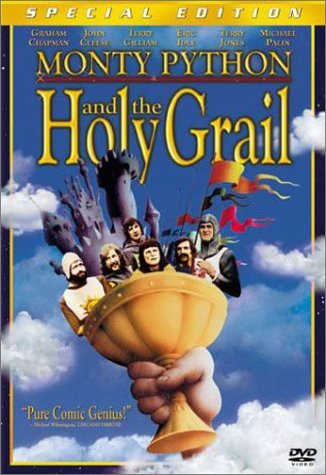 Yesterday was World Communion Sunday, and we spent time in our Sunday School classes to teach about Communion.
I was in a class of third graders. In our discussion of how "Christ and the benefits of the new covenant are represented, sealed, and applied to believers," one boy asked if Holy Grail was real.
I said, "Yes, if you mean did Jesus actually drink from a cup at the last Supper. However, the stories of King Arthur and the Grail were legends, and there is nothing magical about the cup. What’s more important is that Holy Communion is one of the ways that the Holy Spirit unites us to Jesus and each other."
To which, the children began quoting from Monty Python and the Holy Grail: "That’s the most foul, cruel, and bad-tempered rodent you ever set eyes on!" Every eight-year-old child, including the girl, was a Monty Python fan. Welcome to the Presbyterian Church!
Friday, September 29, 2006
Newsletter: Counting our Blessings
Emmett Maxon used to tell a story about two angels. One angel was called the "Gimme" angel. It was his job to answer all the requests people made in their prayers. This particular angel never had any time off. He was tired and ragged from running around handling the ever mounting pile of requests. The other angel was called the "Thank-you" angel. He managed all the prayers of gratitude and thanksgiving. This angel was always relaxed and rested. He had so little to do that he took up golf and quilting.
I think Emmett’s story reveals less about the heavenly host than it does our own humanity. We are blessed in so many ways, yet we seem to take all of it for granted. We are prone to ingratitude. Jesus himself noted this tendency. After healing ten men of leprosy, only one returned to thank him.
Our congregation has recently begun a process of discernment. As a church, we are listening carefully to God’s call and responding to that call. In our recent "Conference on the Past," we realized how blessed we are. It is now our opportunity to respond in gratitude. From now until Thanksgiving (November 23), we are counting our blessings.
We need your help. In every Sunday School class, circle meeting, committee meeting, and the like take a moment to jot down a few of God’s blessings. As families gather around the dinner table, write down a couple reasons why we are thankful. Then send them to the church. We have something to be thankful about. Let’s return and give our praise.
I think Emmett’s story reveals less about the heavenly host than it does our own humanity. We are blessed in so many ways, yet we seem to take all of it for granted. We are prone to ingratitude. Jesus himself noted this tendency. After healing ten men of leprosy, only one returned to thank him.
Jesus asked, "Were not all ten cleansed? Where are the other nine? Was no one found to return and give praise to God except this foreigner?"(Luke 17:17-18)As rare as gratitude is, it is the essence of the Christian life. Being released from the bondage of sin and reconciled to God by grace alone, we are stirred to live in thanksgiving.
Our congregation has recently begun a process of discernment. As a church, we are listening carefully to God’s call and responding to that call. In our recent "Conference on the Past," we realized how blessed we are. It is now our opportunity to respond in gratitude. From now until Thanksgiving (November 23), we are counting our blessings.
We need your help. In every Sunday School class, circle meeting, committee meeting, and the like take a moment to jot down a few of God’s blessings. As families gather around the dinner table, write down a couple reasons why we are thankful. Then send them to the church. We have something to be thankful about. Let’s return and give our praise.
Thursday, September 28, 2006
Eliminate the General Assembly?
The General Assembly Council under the new leadership of Linda Valentine is currently meeting in Louisville, Kentucky. So far, two presbyteries and a synod have asked for a “consultation” to study the “viability and stability of the synods and presbyteries of this denomination.” Clearly the intent of this request is to strengthen those lower governing bodies. No one is seriously discussing the possibility that presbyteries be eliminated.
However, Rev. Casey Jones in a letter to Presbyweb has suggested that we are putting our attention on the wrong governing body.
However, Rev. Casey Jones in a letter to Presbyweb has suggested that we are putting our attention on the wrong governing body.
While GA cannot and should not be eliminated, it (and not the "faith once and for all delivered to the saints" [Jude 3]) is what must be re-imagined, de-mythologized, de-constructed, humbled, pared down, and radically transformed, limited, and changed. Our present top-heavy, out-of-touch, and often arrogant GA structures are an important part of what is literally killing us. Will we be able to see and act on this? One can only hope.I am intrigued by the thought. The overwhelming majority of ministry and mission happens at local congregations. The presbyteries are the governing bodies closest to those local congregations providing accountability and support. In a healthy denomination, talent and financial support should be focused where it can make the biggest impact for the kingdom of God--local churches, overseas missions and the governing bodies that support them. We shouldn't have to worry about the “viability and stability” of the presbyteries. Instead our denomination is exactly upside down. The attitude seems to be that the congregations and presbyteries serve the General Assembly. We need to seriously consider why the General Assembly exists in the first place.
Wednesday, September 27, 2006
A Prayer of Confession
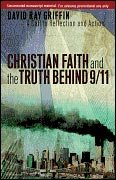 I've been avoiding this topic for a while, but I received a brochure in the mail today to which I needed to respond. Westminster/John Knox Press has recently published a book accusing the United States government with orchestrating the attacks on 9/11/2001. The brochure was titled: "Faithful, Informed and in Touch with Today's World." Amazingly, Christian Faith and the Truth Behind 9/11 by David Ray Griffin misses on every count.
I know I am a few weeks behind. Plenty of folks have already made their comments on the book. There is a great article from the Wall Street Journal about the book featuring "A Classical Presbyterian." The best line from the article is from our Moderator Joan Gray...
"To me personally, and I am sure for the great majority of Presbyterians, the idea that the United States government engineered the 9/11 attacks is too over the top to be taken seriously." (Thank you, Joan!)The denominational magazine, Presbyterians Today, has helpful analysis of the book by Alan Wisdom. Quotidian Grace quotes a "liberal" in the Christian Century complaining that the shoddy scholarship and conspiracy thinking actually hurts the legitimate critics of the Bush Administration. And in the interest of rolling eyes, here is Presbyterian Publishing Corporation's defense of the book's publication.
Why have I avoided making a comment? First, I could not fathom that anyone would be that far off the parade route. Good people can disagree with foreign policy decisions made after 9/11, but reality is reality. That took some time to digest.
Secondly, I realize now that I had been a bit selective. Although WJK has published many good books, it has also published lots of garbarge. Many titles of which contradict the historic teachings of the Church. In a way, these books are an affront to the reality of the faith. Should I be so upset about a book that questions the reality of world events while accepting books that question the revelation of God in Jesus Christ? Especially if they are from the Presbyterian Publishing Corporation?
Father forgive me.
Tuesday, September 19, 2006
Pope Benedict, Athens and Jerusalem
What should be the proper relationship between reason and Christian faith? In the third century, Tertullian asked the question, "What does Athens have to do with Jerusalem?" Pope Benedict XVI in a recent address at the University of Regensburg has answered a resounding, "everything."
This is the same speech in which the pontiff quoted a 14th Century Byzantine emperor speaking negatively about Mohammed. This is the same speech that criticizes violence done in the name of Islam, which at the same time, some Muslims use as a justification for violent acts. (I’ve stopped trying to understand that one.) Unfortunately, Benedict’s main thesis is lost in the violence that has erupted.
Benedict’s argument for the compatibility of reason and revelation is merely the reiteration of many years of Roman Catholic thought. For example, one could argue that Thomas Aquinas’ whole project hinged on making Aristotle compatible to Christian teaching. Benedict argues that the bringing together of the Athens and Jerusalem is Christianity, and Christianity is basically a European religion. Benedict says,
Benedict believes that the Reformation began the de-Hellinization of Christianity. In other words, Reformers divided Jerusalem and Athens. Kant reduced Jerusalem to a ghetto, and Harnack bulldozed much of Jerusalem to make it presentable to the modern Athens. It is not surprising that the head of the Roman Catholic Church would suggest that liberal Protestant theology was the inevitable result of Martin Luther nailing 95 theses on the Wittenberg door. It is also not surprising that I respectfully disagree.
This brings me back to Benedict’s quotes about Islam. He quotes the observations of Theodore Khoury, the editor of the 14th Century dialogue mentioned earlier.
The Reformers were not trying to remove reason from faith. Instead they were trying to keep reason humble. Even our reason is subject to sinfulness and idolatry. By starting with the self-revelation of God in Jesus Christ and the Scriptures, reason is made modest. Its ultimate role is not the discovery of the truth but instead the protection of the truth. Rather than Benedict’s Hellinization, I believe that God’s revelation makes our faith different from the Islam described by Ibn Hazn. That revelation is the corrective moving us away from idolatry, sin, and heresy. Only when we follow Jesus’ words, "abide in me," will the right relationship between faith and reason be established.
This is the same speech in which the pontiff quoted a 14th Century Byzantine emperor speaking negatively about Mohammed. This is the same speech that criticizes violence done in the name of Islam, which at the same time, some Muslims use as a justification for violent acts. (I’ve stopped trying to understand that one.) Unfortunately, Benedict’s main thesis is lost in the violence that has erupted.
Benedict’s argument for the compatibility of reason and revelation is merely the reiteration of many years of Roman Catholic thought. For example, one could argue that Thomas Aquinas’ whole project hinged on making Aristotle compatible to Christian teaching. Benedict argues that the bringing together of the Athens and Jerusalem is Christianity, and Christianity is basically a European religion. Benedict says,
This inner rapprochement between biblical faith and Greek philosophical inquiry was an event of decisive importance not only from the standpoint of the history of religions, but also from that of world history -- it is an event which concerns us even today. Given this convergence, it is not surprising that Christianity, despite its origins and some significant developments in the East, finally took on its historically decisive character in Europe. We can also express this the other way around: This convergence, with the subsequent addition of the Roman heritage, created Europe and remains the foundation of what can rightly be called Europe.This attitude explains Benedict’s concern about the recovery of Christianity in Western Europe. In his view, Europe is not Europe without the Christian faith. Moreover, it reveals one of Benedict’s fundamental critiques of Islam. To extend Tertullian’s metaphor, Islam has failed to bring Mecca and Athens together. However, the pope’s criticism here of Islam is only illustrative. He is more concerned about keeping Jerusalem and Athens firmly intertwined.
Benedict believes that the Reformation began the de-Hellinization of Christianity. In other words, Reformers divided Jerusalem and Athens. Kant reduced Jerusalem to a ghetto, and Harnack bulldozed much of Jerusalem to make it presentable to the modern Athens. It is not surprising that the head of the Roman Catholic Church would suggest that liberal Protestant theology was the inevitable result of Martin Luther nailing 95 theses on the Wittenberg door. It is also not surprising that I respectfully disagree.
This brings me back to Benedict’s quotes about Islam. He quotes the observations of Theodore Khoury, the editor of the 14th Century dialogue mentioned earlier.
But for Muslim teaching, God is absolutely transcendent. His will is not bound up with any of our categories, even that of rationality. Here Khoury quotes a work of the noted French Islamist R. Arnaldez, who points out that Ibn Hazn went so far as to state that God is not bound even by his own word, and that nothing would oblige him to reveal the truth to us. Were it God's will, we would even have to practice idolatry.I must admit that when I read this description of Islam, I immediately thought of some Presbyterians that are so enamored with the sovereignty and freedom of God that they forget the incarnation. I am reminded of those Presbyterians who claim that the Holy Spirit would speak in contradiction to Jesus Christ or the Scriptures. Benedict sees this as a failure of reason. I see it as a failure to embrace revelation.
The Reformers were not trying to remove reason from faith. Instead they were trying to keep reason humble. Even our reason is subject to sinfulness and idolatry. By starting with the self-revelation of God in Jesus Christ and the Scriptures, reason is made modest. Its ultimate role is not the discovery of the truth but instead the protection of the truth. Rather than Benedict’s Hellinization, I believe that God’s revelation makes our faith different from the Islam described by Ibn Hazn. That revelation is the corrective moving us away from idolatry, sin, and heresy. Only when we follow Jesus’ words, "abide in me," will the right relationship between faith and reason be established.
Sunday, September 17, 2006
A Matter of Polity
A few days ago, I heard a member of a member of another Presbyterian church tell this joke:
Too often we seem to conflate the leadership of a governing body for the body itself. I have seen pastors treat sessions as extensions of themselves. I have seen presbytery executives assume that their opinions have the weight of the presbytery behind them. Many buy into the ruse. More than once during debate at a presbytery meeting concerning an overture from a particular session, some asked the pastor about "his or her overture." Such actions are contrary to Presbyterian governance.
Another example of poor polity comes from the "double super secret" documents drafted by denominational lawyers addressing property concerns. From what I understand, those documents were distributed to some presbytery executives as early as 2002. The documents were labeled as "confidential" or "do not distribute." Why should the presbytery itself be kept in the dark? Isn’t the presbytery the governing body, not the executive? In fact, I would argue that the executive works only at the discretion of the presbytery. Historically, presbyteries did not even have executives. Bypassing the normal governing bodies suggests that someone was trying to hide something (even if they weren't).
Our polity indicates we are ruled by elders. Unfortunately, our practice doesn’t always agree.
Two dogs meet in a park. On says, "I am a St. Bernard. I help save people." The other responds, "I don’t know what I am. I must be a Presbyterian."I believe that many of our problems in our denomination are rooted in an identity crisis. We have real doubts about what it means to be Reformed, Presbyterian and in some cases, Christian. Lately, I have been concerned about the lack of understanding of basic Presbyterian polity among our leadership. Our congregation has recently received a pastoral letter from the Synod exec of the Synod of the Sun. In the letter, Judy Fletcher wrote...
With leaders from all 11 presbyteries in this synod, we worshipped, prayed and considered the needs of Presbyterians. In congregation after congregation there are people like you trying to be faithful to Christ and diligent in mission and ministry. That was just as true before the Assembly...Now, I was grateful to hear that those in attendance--presbytery executives, staff members, members of Committees of Ministry, moderators of presbyteries, etc–agreed to uphold our constitution. However, those people do not speak for the presbytery as a whole. The language of "affirmed" suggests that a formal action was taken. None was. I will not question anyone’s motives here, but the synod executive’s opinion doesn’t carry much weight. For example, Mission Presbytery’s recent actions along with the synod’s Permanent Judicial Council’s ruling appears to contradict the Synod executive’s letter. Someone sitting in a pew would be baffled again at more confusing language coming from the leadership of the church.
All 11 presbyteries affirmed that the Book of Order has not changed and the ordination of non-celibate gay and lesbian persons is still prohibited. Presbyteries expressed commitment to uphold our constitution.
Too often we seem to conflate the leadership of a governing body for the body itself. I have seen pastors treat sessions as extensions of themselves. I have seen presbytery executives assume that their opinions have the weight of the presbytery behind them. Many buy into the ruse. More than once during debate at a presbytery meeting concerning an overture from a particular session, some asked the pastor about "his or her overture." Such actions are contrary to Presbyterian governance.
Another example of poor polity comes from the "double super secret" documents drafted by denominational lawyers addressing property concerns. From what I understand, those documents were distributed to some presbytery executives as early as 2002. The documents were labeled as "confidential" or "do not distribute." Why should the presbytery itself be kept in the dark? Isn’t the presbytery the governing body, not the executive? In fact, I would argue that the executive works only at the discretion of the presbytery. Historically, presbyteries did not even have executives. Bypassing the normal governing bodies suggests that someone was trying to hide something (even if they weren't).
Our polity indicates we are ruled by elders. Unfortunately, our practice doesn’t always agree.
Monday, September 11, 2006
Our Community
I just e-mailed this letter to the editor of our local newspaper...
Dear Editor,
On the fifth anniversary of the worst attack on American soil, a group of people gathered in front of the downtown fire station our small town. We are far away from New York City, Washington, DC, and Shanksville, Pennsylvania, yet this little town south of the Red River understands community in a way that extends beyond geography.
Since my family moved here in 2003, I have again and again been impressed with the sense of community here. I have experienced it among the pastors and church members here. I have seen it in the precious time that many in our town give to volunteer work. I have witnessed it as the community rallies around folks in need. What other community of our size can boast of so many active clubs, organizations, and groups? As people decry the isolation and individualism of the modern world and small towns disband service organizations due to lack of interest, this town surprises me.
True, we face some huge challenges. The social problems of the world are here–substance abuse, teenage pregnancy, broken families, and the like. We wring our hands over them like everyone else. There are many even within our midst who are lonely and disconnected. Still, I have hope because of the grace God has already given us. Our sense of community suggests a way forward.
9/11 reminded us of words like sacrifice, compassion, faith, and community, yet they are more than words. They are a calling to a way of life. Perhaps I am naive, but I think our city just might be receptive to that call.
Dear Editor,
On the fifth anniversary of the worst attack on American soil, a group of people gathered in front of the downtown fire station our small town. We are far away from New York City, Washington, DC, and Shanksville, Pennsylvania, yet this little town south of the Red River understands community in a way that extends beyond geography.
Since my family moved here in 2003, I have again and again been impressed with the sense of community here. I have experienced it among the pastors and church members here. I have seen it in the precious time that many in our town give to volunteer work. I have witnessed it as the community rallies around folks in need. What other community of our size can boast of so many active clubs, organizations, and groups? As people decry the isolation and individualism of the modern world and small towns disband service organizations due to lack of interest, this town surprises me.
True, we face some huge challenges. The social problems of the world are here–substance abuse, teenage pregnancy, broken families, and the like. We wring our hands over them like everyone else. There are many even within our midst who are lonely and disconnected. Still, I have hope because of the grace God has already given us. Our sense of community suggests a way forward.
9/11 reminded us of words like sacrifice, compassion, faith, and community, yet they are more than words. They are a calling to a way of life. Perhaps I am naive, but I think our city just might be receptive to that call.
September 11th
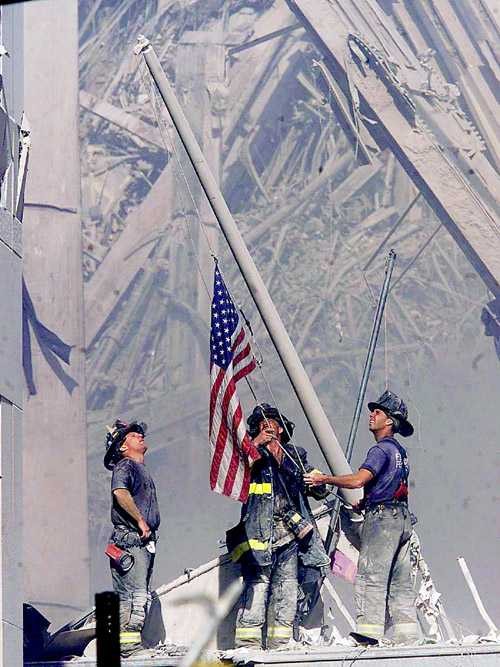
Five years ago, we were reminded that evil is real, that heroes exist, and that hope never dies. Despite her sins, America remains a beautiful, wonderful land whose greatest resource is her people. Let us not forget those who died, those who mourn, and the children whose parents are never coming home.
"Oh, that my words were recorded, that they were written on a scroll, that they were inscribed with an iron tool on lead, or engraved in rock forever! I know that my Redeemer lives, and that in the end he will stand upon the earth" (Job 19:23-25).
Tuesday, September 05, 2006
Purpose-Driven Splits?
A friend sent a Wall Street Journal article* reporting that Rick Warren’s Purpose-Driven® methods are dividing some congregations. (Alas, there is no link unless you have a paid subscription.) As churches adopt Warren’s approach, some traditional members are balking. WSJ readers probably won’t be too sympathetic with the comments of one of the dissatisfied, "[The pastor of one church in transition] didn’t preach on someone going to hell." That’s probably the first time that I’ve heard that a pastor didn’t preach enough hellfire and damnation.
Nonetheless, I am sympathetic with the traditional churchgoers. There are serious concerns that Rick Warren has accommodated the gospel to a consumer-driven American culture. One pastor is quoted as saying, "I believe that Jesus died for everyone," not just people in a "target audience." These theological concerns are important and should not be ignored.
In addition, there are real pastoral issues when a congregation makes a major change. In the Purpose-Driven® Church, Rick Warren even suggests that pastors may want to think twice before applying his thoughts to an existing church. There is an implied preference for new church developments. Established congregations are just too messy.
Unfortunately, congregants who don’t feel respected and heard will work against any change. Forcing a cookie-cutter program on a congregation in a heavy-handed way does not win friends. I will easily grant that not every Purpose-Driven® congregation is guilty of this. However, some are reaping what they sow.
Rick Warren distances himself from the hardball tactics, but no wonder some churches are finding splits instead of growth.
To be fair, I know nothing about church growth. No one is beating down my door searching for advice. As a pastor, all I try to do is love my people and more importantly love God. All I want is a church which manifests the fruit of the Spirit – "love, joy, peace, patience, kindness, goodness, faithfulness, gentleness and self-control" (Gal 5:22-23). I could care less whether it looks like Saddleback Church or not.
* "A Popular Strategy for Church Growth Splits Congregants" by Suzanne Sataline. Wall Street Journal. September 5, 2006.
Nonetheless, I am sympathetic with the traditional churchgoers. There are serious concerns that Rick Warren has accommodated the gospel to a consumer-driven American culture. One pastor is quoted as saying, "I believe that Jesus died for everyone," not just people in a "target audience." These theological concerns are important and should not be ignored.
In addition, there are real pastoral issues when a congregation makes a major change. In the Purpose-Driven® Church, Rick Warren even suggests that pastors may want to think twice before applying his thoughts to an existing church. There is an implied preference for new church developments. Established congregations are just too messy.
Unfortunately, congregants who don’t feel respected and heard will work against any change. Forcing a cookie-cutter program on a congregation in a heavy-handed way does not win friends. I will easily grant that not every Purpose-Driven® congregation is guilty of this. However, some are reaping what they sow.
Some pastors learn how to make their churches purpose-driven through training workshops. Speakers at Church Transitions Inc., a Waxhaw, N.C., nonprofit that works closely with Mr. Warren's church, stress that the transition will be rough. At a seminar outside of Austin, Texas, in April, the Revs. Roddy Clyde and Glen Sartain advised 80 audience members to trust very few people with their plans. "All the forces of hell are going to come at you when you wake up that church," said Mr. Sartain, who has taught the material at Mr. Warren's Saddleback Church.
During a session titled "Dealing with Opposition," Mr. Clyde recommended that the pastor speak to critical members, then help them leave if they don't stop objecting. Then when those congregants join a new church, Mr. Clyde instructed, pastors should call their new minister and suggest that the congregants be barred from any leadership role.
"There are moments when you've got to play hardball," said the Rev. Dan Southerland, Church Transitions' president, in an interview. "You cannot transition a church...and placate every whiny Christian along the way."
Rick Warren distances himself from the hardball tactics, but no wonder some churches are finding splits instead of growth.
To be fair, I know nothing about church growth. No one is beating down my door searching for advice. As a pastor, all I try to do is love my people and more importantly love God. All I want is a church which manifests the fruit of the Spirit – "love, joy, peace, patience, kindness, goodness, faithfulness, gentleness and self-control" (Gal 5:22-23). I could care less whether it looks like Saddleback Church or not.
* "A Popular Strategy for Church Growth Splits Congregants" by Suzanne Sataline. Wall Street Journal. September 5, 2006.
Monday, September 04, 2006
Underlying Causes of Terrorism
Deep down, I long to be a pacifist. Although I accept the just war position as credible, I would love the simplicity of rejecting all violence. I would gladly march in step behind Stanley Hauerwas and John Howard Yoder with the banner of Christ unfurled. I search for nonviolent solutions, and I give serious consideration to the proponents of such. I am moved by the stories of Martin Luther King, Jr and the civil rights movement. I am emboldened by stories of Rosenstrasse where nonviolent protests by German family members won the release of Jews during the Nazi Regime. As a result, I was interested in reading David Cortright’s "Nonviolence and the Strategy against Terrorism."
Cortright begins by quoting Jim Wallis writing, "If nonviolence is to have any credibility, it must answer the questions violence purports to answer, but in a better way." The challenge is a world of Al Quaeda, Hezbollah, and a nuclear Iran. Can nonviolence provide a pathway to justice and peace? Unfortunately, I’m still searching. Cortright’s position does not satisfy.
Cortright’s response to terrorism hinges on two strategies. First, we should step up efforts of law enforcement and intelligence gathering. He writes,
The most urgent priority for countering terrorism, experts agree, is multilateral law enforcement to apprehend perpetrators and prevent future attacks. Cooperative law enforcement and intelligence sharing among governments have proven effective in reducing the operational capacity of terrorist networks. Governments are also cooperating to block financing for terrorist networks and deny safe haven, travel, and arms for terrorist militants. These efforts are fully compatible with the principles of nonviolence.Whether these efforts are fully compatible with the principles of nonviolence is another debate. My guess is that Cortright would not allow law enforcement and intelligence agencies to use torture, for example, to gather information on terrorist groups. Beyond that, the problem of state-sponsored terror remains. We cannot send a squad car to a Taliban-controlled Afghanistan to pick up suspected terrorists. Likewise Iran will probably not honor our extradition requests. Force and the threat of force remain the staples of foreign policy. I’m still waiting for a credible alternative.
Second, Cortright suggests that we should address the underlying problems that leads to terrorism.
A nonviolent approach should not be confused with appeasement or a defeatist justification of terrorist crimes. The point is not to excuse criminal acts but to learn why they occur and use this knowledge to prevent future attacks. A nonviolent strategy seeks to reduce the appeal of militants’ extremist methods by addressing legitimate grievances and providing channels of political engagement for those who sympathize with the declared political aims.A good question might be what constitutes legitimate political grievances? Poverty, injustice, the existence of Israel, the election of George W. Bush? Probably a better question might be why some peoples who face legitimate political grievances do not resort to terrorism? For example, blacks in Birmingham, Alabama at the height of segregation did not strap bombs to themselves and blow up buses. They had legitimate grievances, and they addressed them in another way.
Al Quaeda has released another video calling on Americans to convert to Islam or face the consequences. Iranian President Ahmadinejad has challenged President Bush to embrace Islam. Palestinian Muslims forced the conversion of Fox News reporters at gunpoint. Sadly, when I look at the underlying causes of the terrorism, one screams at me–totalitarian Islam.
Cortright seems downright oblivious to this underlying cause. Unfortnately, no solutions will be found unless we accurately understand the threat.
Thursday, August 31, 2006
The Nature of Doctrine
Again, I've been listening to a podcast from Pittsburgh Theological Seminary about the recent General Assembly report on the doctrine of the Trinity. In the lecture, Charles Partee spends some time discussing the practice of theology and the nature of doctrine. Here are some excerpts (the emphasis is my own)...
Candidates for ministry vow to "receive and adopt the essential tennets of the Reformed faith." As we examine candidates and discuss essential tennets within the church, some reflection on the nature of doctrine is necessary. Theology is secondary to worship. Our theology must not begin with humanity or an abstract notion of God. It begins on our knees in worship. Ultimately, doctrine is in service to the Church. If it does not protect the Biblical witness, then it is useless. I agree with Partee here.
I would have liked to have seen a much more dramatic approach to the question of what it is to do theology. That is, how does one create doctrine, and for what purpose.
This is my suggestion. Theology in my mind is not science. It simply is not science, and the disciplines of science have only a tangential reference to what theologians do. Secondly, theology is not philosophy. We do a lot of talk about reason and synthetic a priori and analytic a priori and concept of experience and all those kinds things. But in the last analysis, theology is not philosophy no matter what tools that one might appropriate from that discipline. At the same time, theology is not poetry. There is a real reference. There are factual components, and what we do in theology is to make truth claims of a particular sort.
My conviction then is that what theology is trying to do is not explain but protect. It maybe entirely too avant garde for a committee of the General Assembly to try to make that point. But I would suggest that in a classroom setting that you at least reflect on the notion that theology is not the truth but is in fact an attempt of the reverent Church to protect the truth which is quite beyond our comprehension…
In the Christian Church for all our academic emphasis, the first orders of speaking are, in fact, preaching, hearing, singing, and praying. Theology is in my judgment a second order of activity. It is an attempt in our thinking to be faithful to these other parts of the church’s life. The whole language of the Christian Church is not classroom language but is church language. Therefore, a lecture and a sermon are very different activities.
Candidates for ministry vow to "receive and adopt the essential tennets of the Reformed faith." As we examine candidates and discuss essential tennets within the church, some reflection on the nature of doctrine is necessary. Theology is secondary to worship. Our theology must not begin with humanity or an abstract notion of God. It begins on our knees in worship. Ultimately, doctrine is in service to the Church. If it does not protect the Biblical witness, then it is useless. I agree with Partee here.
Wednesday, August 30, 2006
Renewing One Congregation at a Time
Jim Berkley is a reporter for the Institute on Religion and Democracy which has spent the past several years seeking a change in the social and political witness of mainline denominations. As a Presbyterian, Berkley primarily concerns himself with issues facing the PCUSA. He attended the recent Presbyterian Coalition and the Presbyterian Global Fellowship meetings in Atlanta.
Berkley suggests that the Presbyterian Global Fellowship is following a specific playbook.
Berkley suggests that the Presbyterian Global Fellowship is following a specific playbook.
The Presbyterian Global Fellowship (PGF) attitude seemed to be that the Presbyterian Church (U.S.A.) is largely irrelevant. Thus, the PGF folks will just go ahead and build strong churches that have an outward, missional focus. They're not going to spend much energy anymore thinking about polity machinations or Louisville decrees; they're just going to pursue excellence with a band of missional companions, despite the denomination.
Whether this attitude is an accurate appraisal of PGF remains to be seen. Berkley himself admits as much. No matter how accurate, however, the thought represents the view of many evangelical pastors and elders within the denomination. Whether weary of the battle or happier in hands-on ministry, evangelicals often concern themselves with their local congregation, ignoring the happenings in the greater church.
If Berkley is correct, I do not see this attitude as much of a change from the status quo. Vibrant, healthy churches have always existed in the PCUSA. Unfortunately, as individual congregations have improved, that improvement has not translated to the greater denomination.
Can this strategy bring about renewal in the denomination? Only if congregations become less insular. Healthier congregations should partner with weaker ones. Coalitions of congregations should develop and promote resources for renewal. If possible, these should be accomplished through presbyteries. If not, congregations should do these things on their own. Many small, struggling churches are begging for assistance. Evangelicals should make a concerted effort to help these congregations. Through local churches, the denomination can be renewed one congregation at a time.
Monday, August 28, 2006
One Cheer for Christendom
During a mission trip to Senegal, I had an opportunity to teach church history to some future West African pastors. At one point in the class, we were discussing about how Christianity became the official religion of the Roman Empire. Raised on Jacques Ellul and Stanley Hauerwas, I began to decry the heresies of Christendom. I argued that the political recognition of Christianity was a negative mark on the history of the church. The students were confused. Many of these students had come from countries where Islam was the dominant religion with either cultural or political sanction. They could not imagine that a Christianity without persecution could be a bad thing.
I thought of those students recently when I heard a lecturer condemning the evils of Christendom. What was once an important and novel critique has unfortunately become cliché. Church history before Constantine, good. Church history after Constantine, bad. To be fair, the sins of Christendom still haunt us. The largest is the church’s abdication of it’s witness to the kingdom of God. Instead, the church has often been a chaplain for the existing cultural and political order.
I taught my African students that the official recognition and protection of Christianity opened the door to heresy and laziness. They taught me that being a persecuted minority isn’t much fun. Although flawed, Christendom deserves one cheer if not three.
We must not forget that Christendom Christianity witnessed to the gospel in its own imperfect way. Christendom produced Martin Luther, John Calvin, Karl Barth and even Stanley Hauerwas. Along with its sins, the Christendom church has done a multitude of good works. The church is always a mix of wheat and tares. To emphasize the tares to the exclusion of the wheat is patently unfair.
The real danger of making a caricature of Christendom lies not in the past, but the future. Christendom is by most accounts dead. The post-modern church will not be susceptible to the sins of past. However, she will be tempted in many new ways. Being anxious to condemn Christendom, we make ourselves blind to our own temptations. Again, the church is always a mix of wheat and tares. Every age demands sober reflection on the nature of the church.
I thought of those students recently when I heard a lecturer condemning the evils of Christendom. What was once an important and novel critique has unfortunately become cliché. Church history before Constantine, good. Church history after Constantine, bad. To be fair, the sins of Christendom still haunt us. The largest is the church’s abdication of it’s witness to the kingdom of God. Instead, the church has often been a chaplain for the existing cultural and political order.
I taught my African students that the official recognition and protection of Christianity opened the door to heresy and laziness. They taught me that being a persecuted minority isn’t much fun. Although flawed, Christendom deserves one cheer if not three.
We must not forget that Christendom Christianity witnessed to the gospel in its own imperfect way. Christendom produced Martin Luther, John Calvin, Karl Barth and even Stanley Hauerwas. Along with its sins, the Christendom church has done a multitude of good works. The church is always a mix of wheat and tares. To emphasize the tares to the exclusion of the wheat is patently unfair.
The real danger of making a caricature of Christendom lies not in the past, but the future. Christendom is by most accounts dead. The post-modern church will not be susceptible to the sins of past. However, she will be tempted in many new ways. Being anxious to condemn Christendom, we make ourselves blind to our own temptations. Again, the church is always a mix of wheat and tares. Every age demands sober reflection on the nature of the church.
Sunday, August 27, 2006
Hate-Word of the Month: Missional
I have recently subscribed to the Pittsburgh Theological Seminary podcast, and I was listening to a classroom discussion dated 5-3-06 concerning the General Assembly report on the Trinity. The discussion is a good addendum to an article written by Andrew Purves and Charles Partee in the March/April 2006 issue of Theology Matters.
Given some of the recent discussion concerning the Presbyterian Global Fellowship, I found this intriguing quote by Andrew Purves...
I am a pastor whose favorite books in seminary were Calvin's Institutes and Bosch's Transforming Mission. I believe Guder's Missional Church is essential reading for pastors. I am currently leading my congregation with the help of the Center for Parish Development to become more "missional." Despite all this, I am totally in agreement with Purves.
Jesus Christ is more foundational than the mission to which he calls. Mission has definitely been a neglected part of ecclesiology. However, we must not over-compensate by neglecting christology.
Given some of the recent discussion concerning the Presbyterian Global Fellowship, I found this intriguing quote by Andrew Purves...
I've decided over the last couple of weeks that my hate-word of the the month is "missional." I've gotten tired of "missional." And I've gotten tired of "missional" because I see it more and more functioning as an abstract adjective. Then it gets filled in with content from wherever. I keep wanting to use the word, "christological." Because if we are in union with Christ, of course, we will be a mission people. We can't be otherwise.
I am a pastor whose favorite books in seminary were Calvin's Institutes and Bosch's Transforming Mission. I believe Guder's Missional Church is essential reading for pastors. I am currently leading my congregation with the help of the Center for Parish Development to become more "missional." Despite all this, I am totally in agreement with Purves.
Jesus Christ is more foundational than the mission to which he calls. Mission has definitely been a neglected part of ecclesiology. However, we must not over-compensate by neglecting christology.
Monday, August 21, 2006
PGF and a Warning from Fox News
"Can Rick Warren save the world?"
That question was the subtitle from a Fox News special last night about Rick Warren and his plans for ending "poverty, disease, illiteracy, spiritual emptiness, and egocentric leadership."
Can Rick Warren make an impact in the world? Yes. Can Rick Warren make a positive influence? Yes. Can Rick Warren save the world? No. There is only one Messiah, and Rick Warren ain't him. I don't blame Rick Warren for the Fox News title. I'm sure he was embarrassed. In fact, I wouldn't be surprised if Warren had a hand in Fox News changing it on their website (Check out before and after).
After attending the Presbyterian Global Fellowship, the offensive Fox News title was a good reminder of the dangers before us. Being missionally-minded must not become a righteouness based on our works. It is easy to be overwhelmed at the pain of the world. Likewise, it is easy to become prideful at our efforts to alleviate suffering. The focus then becomes us. Some might become self-righteous on their own good deeds, but the majority will become burned-out or guilt-ridden because they can't do enough.
Should we reject works? Do we ignore the call to be missional? Heaven forbid. Faith without works is dead, but we must be ever vigiliant to avoid idolatry. The Presbyterian Global Fellowship and our missional congregations must preach and teach the amazing grace of our Lord, Jesus Christ. We should see obedience to Christ and our good works as gratitude to God. The only way we can be "outwardly focused" is to be "inwardly strong."
I am not suggesting that the leadership of PGF intends anything amiss. I just know that they have hard work ahead of them. I pray for their wisdom and courage.
We cannot save the world. Thankfully, Jesus Christ can and has.
That question was the subtitle from a Fox News special last night about Rick Warren and his plans for ending "poverty, disease, illiteracy, spiritual emptiness, and egocentric leadership."
Can Rick Warren make an impact in the world? Yes. Can Rick Warren make a positive influence? Yes. Can Rick Warren save the world? No. There is only one Messiah, and Rick Warren ain't him. I don't blame Rick Warren for the Fox News title. I'm sure he was embarrassed. In fact, I wouldn't be surprised if Warren had a hand in Fox News changing it on their website (Check out before and after).
After attending the Presbyterian Global Fellowship, the offensive Fox News title was a good reminder of the dangers before us. Being missionally-minded must not become a righteouness based on our works. It is easy to be overwhelmed at the pain of the world. Likewise, it is easy to become prideful at our efforts to alleviate suffering. The focus then becomes us. Some might become self-righteous on their own good deeds, but the majority will become burned-out or guilt-ridden because they can't do enough.
Should we reject works? Do we ignore the call to be missional? Heaven forbid. Faith without works is dead, but we must be ever vigiliant to avoid idolatry. The Presbyterian Global Fellowship and our missional congregations must preach and teach the amazing grace of our Lord, Jesus Christ. We should see obedience to Christ and our good works as gratitude to God. The only way we can be "outwardly focused" is to be "inwardly strong."
I am not suggesting that the leadership of PGF intends anything amiss. I just know that they have hard work ahead of them. I pray for their wisdom and courage.
We cannot save the world. Thankfully, Jesus Christ can and has.
Sunday, August 20, 2006
Presbyterian Global Fellowship
I’ve been to Atlanta and back. For the past few days, I’ve been attending the Presbyterian Global Fellowship meeting. This group was born out of evangelical frustration with the fights on sexuality and the financial decimation of the Worldwide Ministries Division of the PCUSA. They are committed to missions abroad and to being missional at home. They are also committed to remaining in the denomination. Several friends recommended that I attend, and I see now that I needed to be there.
I didn’t realize that the stress of pastoral ministry and the frustration caused by the General Assembly have wore me down. Gathering with other evangelicals in Atlanta was therapeutic for me. I wept as I listened to stories of God’s faithfulness. As one speaker suggested, we need to remind each other of who Christ is and what his purpose is for our lives. In the midst of life, we forget too easily.
Clearly, I had a good experience, but I do have concerns. The Presbyterian Global Fellowship is still young, without form or function. We do not know what its relationship with the Presbyterian Church USA will be. We do not know how it will relate to the other renewal groups such as Presbyterians For Renewal, Presbyterian Frontier Fellowship, and the like. We do not know how the fellowship intends to foster the revitalization of congregations. These are not complaints. Rather, it is an acknowledgment that the leadership of the organization has some difficult waters to navigate. General Assembly Moderator Joan Gray was right that they should lead from their knees.
As the organization moves forward, more time will be needed to develop theological clarity. Missional has become a buzz word in churches. In Atlanta, I heard a variety of interpretations of its meaning. Some assumed that missional merely meant more outreach programs. Others saw missional simply in terms of cross-cultural mission trips. Some spoke of organizing the church around mission implying that our unity was found there. I believe these are simplistic understandings of the term. The church is organized around Jesus Christ who sends us into the world. Thankfully some were expressing a more biblical and profound understanding of mission. I hope that these voices will dominate in the future of Presbyterian Global Fellowship.
People were pumped after the meeting this week. A speaker declared that the Atlanta event was the most important event in the PCUSA in twenty years. The truth of that statement remains to be seen. I don’t want to sound like a wet blanket, but the future of our corner of the kingdom of God deserves sober reflection.
I didn’t realize that the stress of pastoral ministry and the frustration caused by the General Assembly have wore me down. Gathering with other evangelicals in Atlanta was therapeutic for me. I wept as I listened to stories of God’s faithfulness. As one speaker suggested, we need to remind each other of who Christ is and what his purpose is for our lives. In the midst of life, we forget too easily.
Clearly, I had a good experience, but I do have concerns. The Presbyterian Global Fellowship is still young, without form or function. We do not know what its relationship with the Presbyterian Church USA will be. We do not know how it will relate to the other renewal groups such as Presbyterians For Renewal, Presbyterian Frontier Fellowship, and the like. We do not know how the fellowship intends to foster the revitalization of congregations. These are not complaints. Rather, it is an acknowledgment that the leadership of the organization has some difficult waters to navigate. General Assembly Moderator Joan Gray was right that they should lead from their knees.
As the organization moves forward, more time will be needed to develop theological clarity. Missional has become a buzz word in churches. In Atlanta, I heard a variety of interpretations of its meaning. Some assumed that missional merely meant more outreach programs. Others saw missional simply in terms of cross-cultural mission trips. Some spoke of organizing the church around mission implying that our unity was found there. I believe these are simplistic understandings of the term. The church is organized around Jesus Christ who sends us into the world. Thankfully some were expressing a more biblical and profound understanding of mission. I hope that these voices will dominate in the future of Presbyterian Global Fellowship.
People were pumped after the meeting this week. A speaker declared that the Atlanta event was the most important event in the PCUSA in twenty years. The truth of that statement remains to be seen. I don’t want to sound like a wet blanket, but the future of our corner of the kingdom of God deserves sober reflection.
Tuesday, August 08, 2006
Evangelical Politicking
The face of evangelical politics is changing according to Michael Gerson, the chief speechwriter of President George W. Bush during the 2000 campaign and first term. In an interview with Christianity Today, Gerson suggests that younger evangelicals are rejecting the one or two issues of the Religious Right and embracing a broader agenda of “social justice.”
A few comments of my own...
1. As these comments suggest, Compassionate Conservatism is more than a cynical rhetorical device. Gerson believes that it is a real governing principle. Despite six years into an administration which wears the term as a mantle, the movement remains ill-defined. Gerson seems to equate Compassionate Conservatism with a secular version of Christian "social justice." George W. Bush was apparently more telling than many thought when he named Jesus as his favorite political philosopher.
2. Jim Wallis is the founder and editor of Sojourners. He has been the default spokesperson for the Religious Left in the United States. Gerson interestingly doesn't seem to have a problem with Wallis' view of "social justice." Both seem concerned with poor and the downtrodden. Calls for battling the AIDS crisis in Africa or for providing perscription drugs for the poor resonate with Christians of all political stripes. The only difference Gerson suggests is that the Religious Left has walked away from traditional morality.
3. Gerson seems to reject the notion of limited government. He suggests that evangelical resistance to active government in the past was based upon the character of that government and not about the limits of government itself. He may be correct. Since evangelicals have had more power to influence policy, they have been less inclined to limit the government's role.
Although I am sympathetic to Gerson's goals for "justice" in society, I am very suspicious of an energetic and ever-expanding government. The attitude reminds me of the naivete of the social gospel movement a century ago. Government is a blunt instrument, and "hubris" is a real problem. The evangelicals of today need to be reminded of the pervasive problem of sin. Human depravity even pollutes our good intentions. Reinhold Niebuhr has much to teach this generation of evangelicals.
For those wishing to pursue their faith within the society, more thought should be given to the natural limits of government and power. We should realize that local governments, better than centralized ones, promote responsibility and accountability. We should also remember that structures such as the family, the church, and voluntary associations can often promote justice and human dignity even better than government. Most of all, we must know that true justice will remain ellusive on this side of the God's kingdom. We ignore these principles to our peril.
Will compassionate conservatism survive rising deficits, the cost of Katrina, and illegal immigration?
There are some members of the Republican Party who do not understand the power and appeal of this set of issues and who have a much more narrow view of government's role…
Until recently, the Republican Party and Christian conservatives have complained that government is the problem. Is that a view they will likely return to?
I think it's a temptation, but I don't think it's going to happen. One reason is because of what's changed in evangelical political involvement.
I think there are lots and lots of young people, in their 20s to 40s, who are very impatient with older models of social engagement like those used by the Religious Right. They understand the importance of the life issues and the family issues, but they know the concern for justice has to be broader and global. At least a good portion of the evangelical movement is looking for leaders who have a broader conception of social justice…
You're starting to sound like Jim Wallis!
No, because I also don't think the answers can be found in the Religious Left. I don't think we can minimize some of the traditional issues. I don't believe it's possible to be concerned about social justice without being concerned about the weakest members of the human family. I also think that America can play an active and positive role in the world and that we're not at fault for everything.
A few comments of my own...
1. As these comments suggest, Compassionate Conservatism is more than a cynical rhetorical device. Gerson believes that it is a real governing principle. Despite six years into an administration which wears the term as a mantle, the movement remains ill-defined. Gerson seems to equate Compassionate Conservatism with a secular version of Christian "social justice." George W. Bush was apparently more telling than many thought when he named Jesus as his favorite political philosopher.
2. Jim Wallis is the founder and editor of Sojourners. He has been the default spokesperson for the Religious Left in the United States. Gerson interestingly doesn't seem to have a problem with Wallis' view of "social justice." Both seem concerned with poor and the downtrodden. Calls for battling the AIDS crisis in Africa or for providing perscription drugs for the poor resonate with Christians of all political stripes. The only difference Gerson suggests is that the Religious Left has walked away from traditional morality.
3. Gerson seems to reject the notion of limited government. He suggests that evangelical resistance to active government in the past was based upon the character of that government and not about the limits of government itself. He may be correct. Since evangelicals have had more power to influence policy, they have been less inclined to limit the government's role.
Although I am sympathetic to Gerson's goals for "justice" in society, I am very suspicious of an energetic and ever-expanding government. The attitude reminds me of the naivete of the social gospel movement a century ago. Government is a blunt instrument, and "hubris" is a real problem. The evangelicals of today need to be reminded of the pervasive problem of sin. Human depravity even pollutes our good intentions. Reinhold Niebuhr has much to teach this generation of evangelicals.
For those wishing to pursue their faith within the society, more thought should be given to the natural limits of government and power. We should realize that local governments, better than centralized ones, promote responsibility and accountability. We should also remember that structures such as the family, the church, and voluntary associations can often promote justice and human dignity even better than government. Most of all, we must know that true justice will remain ellusive on this side of the God's kingdom. We ignore these principles to our peril.
Wednesday, August 02, 2006
Preaching as Calling
The other day, I was doing some work on the "marks of the Church." What I discovered was an article on renewing congregational life by a mainline pastor printed in the Christian Century in 2000. In the article, there was a quote that intrigued me. The author, Anthony Robinson, writes...
This is a wake-up call to all preachers, including myself. When I first had the thought that God might be calling me into ordained ministry, I had a quandry. Why did I have to be ordained to preach? I mean, we are all called "to make disciples," to be "Christ's ambassadors," or to be Christ's "witnesses." What makes the preacher different? While in seminary, I was not ordained, but I preached every Sunday. What would be different in my preaching after my ordination?
Finally, I accepted a solution albeit an imperfect one. The preacher who is called and ordained must share God's Word. He or she must be Christ's witness. There are times when the gospel may be inconvenient, embarrassing, or even risky. The ordained preacher must speak the Word of God when no one else will.
It is so easy to lose track of this vocation. In the midst of ministry, preachers will acquire multiple interests and talents. Some become junior psychologists. Others are experts in marketing or management. Still others become political activists. These abilities are not bad things. In its own way, each can bring glory to God. A good preacher uses these talents to inform preaching, bringing them in submission to the Word. Occasionally, we forget our calling, and these talents replace our preaching. We've all heard sermons that were merely political diatribes, self-help advice or sociological analysis. Resisting these tempations, we must cry out with John the Baptist, "[Jesus Christ] must increase, but I must decrease" (John 3:30).
After the dedication of a new community youth center, a leader in my denomination was invited by the mayor of the city to have coffee. The mayor, who happened to be African-American, told the minister, "You know, I appreciate all your efforts in getting this center opened, and I also appreciate your remarks today. But you are a Christian minister and I didn’t hear you say anything that couldn’t have been said by someone else. We need to hear something different from you. We need to hear something from the gospel."
This is a wake-up call to all preachers, including myself. When I first had the thought that God might be calling me into ordained ministry, I had a quandry. Why did I have to be ordained to preach? I mean, we are all called "to make disciples," to be "Christ's ambassadors," or to be Christ's "witnesses." What makes the preacher different? While in seminary, I was not ordained, but I preached every Sunday. What would be different in my preaching after my ordination?
Finally, I accepted a solution albeit an imperfect one. The preacher who is called and ordained must share God's Word. He or she must be Christ's witness. There are times when the gospel may be inconvenient, embarrassing, or even risky. The ordained preacher must speak the Word of God when no one else will.
It is so easy to lose track of this vocation. In the midst of ministry, preachers will acquire multiple interests and talents. Some become junior psychologists. Others are experts in marketing or management. Still others become political activists. These abilities are not bad things. In its own way, each can bring glory to God. A good preacher uses these talents to inform preaching, bringing them in submission to the Word. Occasionally, we forget our calling, and these talents replace our preaching. We've all heard sermons that were merely political diatribes, self-help advice or sociological analysis. Resisting these tempations, we must cry out with John the Baptist, "[Jesus Christ] must increase, but I must decrease" (John 3:30).
Teach for America: An Alumnus
The June 2006 edition of Readers Digest has a good article on Wendy Kopp the creator of Teach For America, the national teacher corps. It's like the Peace Corps except instead of going overseas, participants teach in inner-city and rural schools. I'm also an alumnus.
The organization has grown considerably since I was in the Mississippi Delta corps from 1992-1994. TFA is certainly more organized and efficient, but I wonder if it retains the entrepeneural spirit that existed. Back then, ideas about teaching and leadership were coming fast and furious. The organization was very experimental. We would discover (or more likely rediscover) good ideas and reject plenty of bad ones. At least we learned from our mistakes. Most emerged from teaching a bit less naive, more experienced, and committed to Teach for America's mantra--"Every child deserves a quality education."
The organization has grown considerably since I was in the Mississippi Delta corps from 1992-1994. TFA is certainly more organized and efficient, but I wonder if it retains the entrepeneural spirit that existed. Back then, ideas about teaching and leadership were coming fast and furious. The organization was very experimental. We would discover (or more likely rediscover) good ideas and reject plenty of bad ones. At least we learned from our mistakes. Most emerged from teaching a bit less naive, more experienced, and committed to Teach for America's mantra--"Every child deserves a quality education."
Subscribe to:
Posts (Atom)